
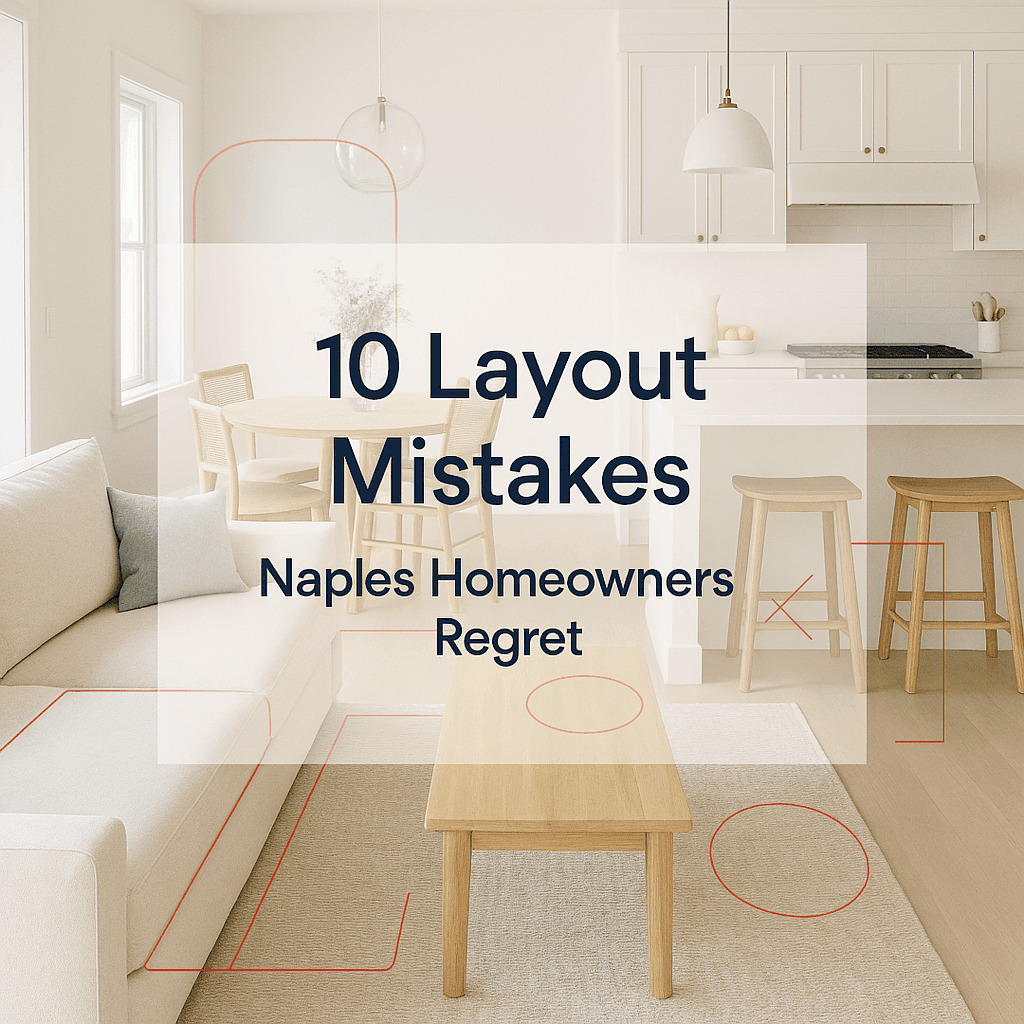
There’s a specific kind of frustration you only feel in a house that looks beautiful but… doesn’t work.
Like when you’re carrying a hot tray from the oven and the walkway is weirdly tight. Or when the kitchen island is gorgeous, huge, expensive, and somehow everyone still bumps into each other. Or when you realize the spot you chose for the coffee station means you’re basically standing in the main traffic lane every single morning.
And in Naples, where a lot of homes are designed for entertaining, indoor outdoor living, and that open airy feel, layout mistakes tend to sting more. Because you notice them all the time. Not just when guests come over.
So here are the big ones. The layout decisions that homeowners tell contractors they wish they could rewind.
If you’re already planning a kitchen remodel, it’s worth getting these sorted early. Layout is hard to fix later without paying twice.
1. Making the island too big (or putting it in the wrong spot)
Big island fever is real.
People see photos online and think, yes. I want that. A giant island with seating for six and storage and waterfall edges and a sink and maybe a wine fridge too.
Then real life happens.
If the island blocks the natural path from kitchen to living room or to the lanai, it becomes a daily annoyance. If the clearances are too tight, drawers and dishwasher doors start colliding. If stools sit where people need to walk, you’ll have a constant bottleneck.
A good rule in practice is to design the island around movement first, not around how impressive it looks.
2. Not planning for traffic to the lanai (this is a Naples classic)
Naples homes love that indoor outdoor flow. Kitchen to patio. Great room to pool. People in and out all day, especially during season.
When the main route to the lanai cuts straight through the cooking zone, you’ll feel it immediately. Guests walk between the fridge and the sink. Kids run past the range. Someone stands chatting right where you need to turn with a pan.
The regret usually sounds like: “We love our kitchen, but it gets chaotic when we host.”
Fix is simple, but not always easy. You want the kitchen work area to be slightly protected, with a clear walkway around it. Like a highway that goes around the kitchen, not through it.
3. Forcing an “open concept” even when the house doesn’t want it
Open concept can be amazing. It can also be a little… loud. Visually and literally.
Some Naples homes, especially older ones, weren’t designed to have every room wide open. When you knock down the wrong wall, you can end up with:
- A living room that has no good TV wall
- A kitchen that’s always on display, messy or not
- A dining area that feels like it’s floating in the middle of nowhere
- Weird ceiling lines or bulkheads you can’t hide
Sometimes the better layout is semi open. Wider openings, better sightlines, but still enough structure to define zones.
4. Ignoring the work triangle (or taking it too literally)
The work triangle is the old school idea that the sink, fridge, and range should form a nice efficient triangle. Still useful.
But people either ignore it completely, or they obsess over it like it’s a law of physics.
In real kitchens today, you also have microwaves, wall ovens, beverage drawers, prep sinks, coffee stations, and pantries that act like mini rooms. So the bigger idea is this:
Design around the way you actually cook.
If you cook a lot, you’ll want clean prep space near the sink, trash pullout near prep, and the range not stuck in a corner where grease travels across the whole room.
If you don’t cook much but entertain a ton, you might want the island to be more serving and gathering, and the heavy cooking zone shifted slightly away.
5. Not leaving landing space next to appliances
This one feels small until you live with it.
You open the fridge. Where do you set the groceries for a second.
You pull a dish out of the microwave. Where does it go.
You take a hot tray out of the oven. What now.
Landing space is just that. A safe, easy spot to set things down, ideally within a step of the appliance.
When it’s missing, it turns normal tasks into awkward little dances.
6. Putting the sink in the island without thinking through the mess
Island sink layouts are super common. And they can work great.
But homeowners often regret it for one reason. The island becomes the visual center of the home, and the sink is… a mess generator. Dishes. Sponges. Soap bottles. Random cups.
Also, if the island is where people sit, nobody loves facing a pile of dirty pans during dinner.
Sometimes it’s better to put the prep sink in the island and keep the main sink on the perimeter. Or shift the main sink to a window wall and keep the island clean for serving and hanging out. As discussed in this podcast episode, careful consideration should be given before placing a sink in an island layout.
7. Underestimating pantry needs (especially with seasonal living)
Naples homeowners often host. And a lot of households stock up differently depending on whether it’s peak season, family visiting, or you’re doing big weekly shops.
A tiny pantry sounds fine until you’re stuffing cereal boxes behind small appliances and stacking paper towels in a hallway closet.
Pantry regret usually shows up as clutter.
- Counters get crowded
- Cabinets become chaotic
- You lose the clean look you paid for
Walk in pantries are popular for a reason. Even a modest one can change how the kitchen feels day to day.
8. Designing a kitchen that looks great… but has no true prep zone
Some kitchens have plenty of counter space, but none of it is in the right place.
Prep zone means: a stretch of counter where you can chop, mix, stage ingredients, with the sink nearby, trash nearby, and ideally the fridge within easy reach.
If the only “open counter” is on the far end next to the coffee maker, you’ll always feel like you’re working around stuff.
This is one of those regrets you can’t unsee once you notice it.
9. Skimping on aisle widths (then living with it forever)
Aisle width sounds boring. It’s not boring when:
- two people can’t pass each other
- the dishwasher blocks the only route through
- drawers hit knees
- guests stand in the way without realizing it
And in bigger Naples homes, it can be tempting to fill space with more cabinets, bigger island, extra seating. But the comfortable movement zone is what makes the kitchen feel high end.
If you’re remodeling, this is where an experienced kitchen remodeling team can save you from expensive “we didn’t think of that” moments. It’s not just style. It’s geometry.
10. Forgetting the “drop zone” and daily life entry points
This one is sneaky.
People enter the kitchen from the garage, side door, or mudroom area. They bring mail, bags, keys, Costco stuff, beach towels, random everything.
If there’s no drop zone, it all lands on the island.
The fix can be simple. A small cabinet run, a drawer for chargers, a hidden shelf for bags, a place where life can land without taking over the kitchen.
Layout mistakes usually happen when the design is based on a picture, not on the way the house is used.
Before you finalize anything, ask yourself a few annoying but helpful questions:
- Where do people walk when they enter, and where are they trying to go
- Where do the kids or guests naturally stand and chat
- Where do groceries come in, and where do they get put away
- Do you want the kitchen to be a stage, or a workspace, or both
And if you want a second set of eyes from people who do this in Naples all the time, you can check out Kitchen Remodeling Naples FL by Cutting Edge here: https://kitchen-remodeling-naples-fl.com/
A good consult is basically layout insurance. Not dramatic. Just true.
Because the finishes are fun, sure. But layout is the part you live with. Every day.
FAQs (Frequently Asked Questions)
What are common kitchen layout mistakes that homeowners regret?
Common regrets include making the kitchen island too big or placing it poorly, not planning traffic flow to outdoor areas like the lanai, forcing an open concept in homes that don’t suit it, ignoring or misapplying the work triangle concept, lacking landing space next to appliances, putting the sink in the island without considering mess and visibility, and underestimating pantry storage needs.
Why is making the kitchen island too big a problem?
A too-large island can block natural pathways between key areas like the kitchen, living room, and lanai. It can create tight clearances causing collisions with drawers or dishwasher doors and cause bottlenecks if stools obstruct walking paths. Designing around movement and flow is more important than just size or appearance.
How should traffic flow to outdoor spaces like a lanai be planned in Naples homes?
Since Naples homes often emphasize indoor-outdoor living, it’s crucial to avoid routing main walkways through cooking zones. Instead, create clear walkways around the kitchen work area so guests and family can move freely without interrupting cooking tasks. This prevents chaos during entertaining and daily living.
Is open concept always the best choice for kitchen layouts?
Not necessarily. While open concept designs offer spaciousness, some homes—especially older ones—may suffer from visual clutter, noise issues, awkward furniture placement, or exposed messes when walls are removed improperly. Semi-open layouts with defined zones can provide better balance between openness and function.
How important is the work triangle in modern kitchen design?
The traditional work triangle of sink, fridge, and range remains a helpful guideline but shouldn’t be followed rigidly. Modern kitchens include multiple appliances like microwaves, coffee stations, and prep sinks. The key is designing based on your actual cooking habits to ensure efficient prep space, trash access, and appliance placement tailored to your lifestyle.
Why do homeowners regret putting the sink in the kitchen island?
While island sinks are popular for their convenience, they often become messy focal points visible from living areas. Dirty dishes and cleaning supplies can detract from aesthetics during meals or gatherings. Alternatives include placing a prep sink on the island while keeping the main sink on a perimeter wall to balance function with cleanliness and social interaction.