
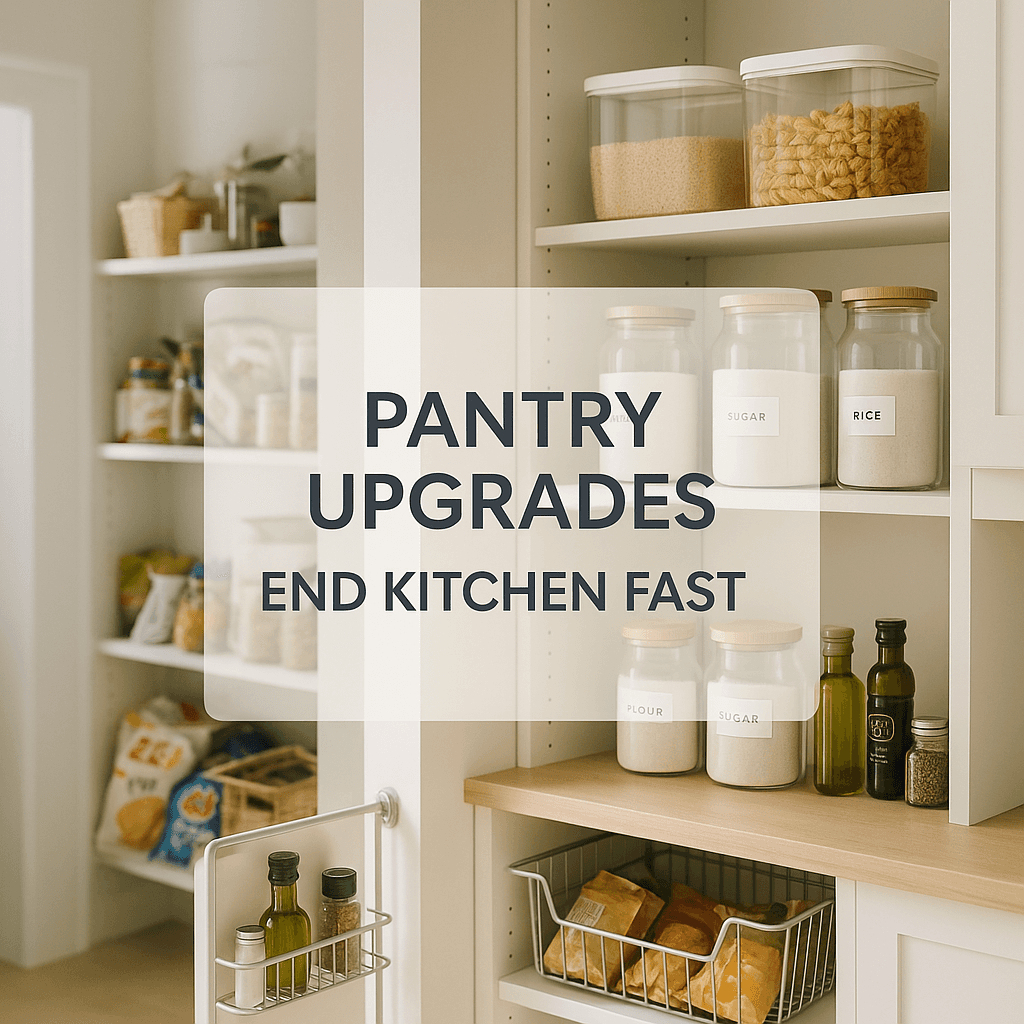
Kitchen clutter is one of those problems that feels weirdly personal. Like you should be able to “just keep it tidy” and yet somehow there’s always a pile of snacks on the counter, four half-empty bags of rice, and that one cabinet where everything falls out if you open it too fast.
Usually, it’s not laziness. It’s the pantry.
A pantry that’s too shallow, too dark, or just not built around how you actually cook will create clutter. Because you can’t see what you have, so you buy doubles. You don’t have a spot for the big stuff, so it lives on the floor. You don’t have zones, so everything drifts.
The good news is that you don’t need a total kitchen overhaul to fix this. A handful of pantry upgrades can calm the whole room down fast. For instance, implementing some pantry organization tips can make a significant difference.
Start with the real goal (not “more space”)
People say they want more pantry space. But what they usually mean is:
- I want to see what I have.
- I want groceries to put themselves away without a battle.
- I want my counters back.
So every upgrade below is built around two things: visibility and easy access. If you can grab it and put it back without moving five other items, clutter drops. Like, immediately.
To achieve this visibility and access, it’s essential to first understand your clutter zones. By identifying these areas, you can then implement specific strategies to tackle them effectively. Here are some tips for managing clutter zones which could be beneficial in your journey towards a more organized kitchen.
1) Pull out shelves (the fastest clutter killer)
If your pantry has standard fixed shelves, stuff disappears into the back. That’s where the clutter starts, because you end up keeping “active items” on the counter instead.
Pull out shelves, also called roll outs, solve that in one move.
Why they work:
- You can access the back without unloading the front.
- You stop losing small items like spice packets, tuna cans, baking stuff.
- You can group items in zones and actually maintain them.
Best places to use them:
- Lower pantry areas for heavier items (flour, oils, appliances)
- Mid shelves for everyday food
- Narrow pantries where depth is working against you
If you do nothing else, do this. It’s the upgrade that makes people say, “Oh. This is what a pantry is supposed to feel like.”
2) Swap one deep shelf for deep drawers
Deep shelves sound helpful. In reality, they turn into food archaeology.
Deep drawers are better because the whole drawer comes to you, and you can use bins inside the drawer without stacking everything like a game of Jenga.
Great drawer categories:
- Snacks (especially kids snacks)
- Breakfast stuff
- Pasta and grains
- Baking supplies
Even better if you do two drawers. One for “grab and go” and one for “cooking ingredients.” That separation alone cuts down on countertop sprawl.
3) Add door storage (but do it the right way)
Door racks are underrated. A pantry door is basically free square footage.
But here’s the trick. Door storage should be for lightweight, high frequency items. Not giant bottles that slam around every time you close the door.
Door rack winners:
- Spices and seasonings
- Small jars (yeast, baking soda, vanilla)
- Foil, parchment, zip bags
- Packets (taco seasoning, gravy mix, instant oatmeal)
Avoid:
- Gallon oils
- Bulk vinegar
- Anything heavy enough to flex the hinges
If you’re already fighting clutter, this is a quick win because it frees up shelf space instantly.
4) Give tall items a real home (vertical zones)
Brooms. Paper towels. Cookie sheets. Folding step stool. That tall bottle of olive oil that never fits anywhere.
These “awkward tall” items are the reason pantries look messy even when they aren’t.
A simple fix is adding a vertical storage zone, usually by:
- reserving one narrow bay for tall items
- adding a couple of tall dividers
- installing a shallow vertical cubby
This is especially good in homes where the pantry becomes the catch all for everything kitchen related.
5) Upgrade lighting so you can actually see the pantry
This sounds small. It is not small.
A dark pantry makes you overbuy and overstack. Because you can’t see what’s behind the cereal boxes. So you compensate by pulling things out… and leaving them out.
Easy lighting upgrades:
- Motion sensor LED strips along the door frame
- Puck lights under shelves
- Hardwired pantry light if you are already remodeling
If you’re doing a higher end remodel, a clean recessed light with a door switch feels amazing. But even battery LEDs help right away.
6) Use clear bins like “drawers” (even without construction)
Not every pantry upgrade has to be carpentry.
Clear bins act like mini pull outs. You slide them out, grab what you need, slide them back. No rummaging.
Best bin categories:
- Snacks
- Baking
- “Dinner helpers” (broth, sauces, mixes)
- Chips and crackers (so the bags stop exploding everywhere)
Pro tip, do not buy bins first. Measure your shelf depth and height, then buy bins that fit like they were meant to be there.
And label them. You do not need a label maker, a piece of tape works. The label is what keeps the system from melting down two weeks later.
7) Go to uniform containers for the “mess makers”
Some foods are just messy by nature. Flour. Sugar. Rice. Granola. Dog treats. Cereal.
When these stay in their original packaging, they slump, tear, and spill. Then you end up with three half open bags on the shelf, plus a scoop living somewhere random.
Uniform containers stop that.
What to move into containers first:
- Flour and sugar
- Rice and pasta
- Oats
- Nuts
- Cereal
You don’t have to containerize everything. Just the stuff that causes chaos. That gets you 80 percent of the benefit without turning your pantry into a showroom you’re scared to use.
8) Create a “drop zone” shelf (so counters stay clear)
Counters collect clutter because they’re convenient. So you have to replace that convenience with something better.
Add one pantry shelf that acts like a landing pad:
- incoming groceries
- school snacks for the week
- backstock you haven’t put away yet
If you do this on purpose, the counter stops being the drop zone. The pantry becomes it.
This is also why walk in pantries feel so calm. They have room for transition. You can build a little version of that in almost any pantry.
9) Add a slim pull out pantry next to the fridge or oven (if you’re remodeling)
If your kitchen layout has a dead narrow gap, this is one of those “why didn’t we do this sooner” upgrades.
A slim pull out pantry, often 6 to 12 inches wide, is perfect for:
- oils and vinegars
- spices
- canned goods
- baking extracts
- everyday sauces
And because it’s a pull out, it’s basically clutter proof. Everything stays upright and visible.
This one is more of a built in solution, but if you’re already considering cabinet changes, it’s a strong move.
10) Make the pantry fit your kitchen habits (the part people skip)
A pantry isn’t just storage. It’s a workflow.
If you pack the pantry with pretty categories that don’t match how you cook, it will fall apart fast. And then clutter comes back, like it always does.
So ask yourself:
- Do we snack constantly? If yes, make snacks the easiest thing to grab.
- Do we cook from scratch? If yes, put baking and cooking staples at eye level.
- Do we buy in bulk? If yes, plan for backstock and heavy items down low.
- Do we entertain? If yes, create a zone for serving items and extras.
This is where custom pantry work really pays off, because you can stop forcing your stuff into generic shelves.
A quick “clutter is happening because…” checklist
If clutter keeps returning, it’s usually one of these:
- No visibility (fixed shelves, dark corners)
- No zones (everything is everywhere)
- No tall storage (paper towels and appliances floating around)
- No backstock plan (extras taking over daily space)
- No easy reset (hard to put things away)
Pick the upgrade that fixes your specific problem first. You don’t need all of them.
When it makes sense to bring in a pro (especially in Naples)
If your pantry is part of a larger kitchen pain point, bad cabinet layout, not enough storage, awkward corners, then pantry upgrades often turn into “we should just remodel this correctly.”
And honestly, that’s not a bad realization.
If you’re in the Naples area and you want a pantry that’s built around your kitchen and your routines, this is exactly the kind of detail work a full kitchen remodel can solve. Cutting Edge Builds does high end kitchen remodeling locally, with custom storage planning as part of the design, not an afterthought. You can check out their site here and request a consultation: https://kitchen-remodeling-naples-fl.com/
Wrap up (and what I’d do first)
If you want clutter gone fast, start here:
- Add pull out shelves or use clear bins as “fake pull outs.”
- Fix lighting so you can see what you own.
- Create zones, especially snacks, cooking, and backstock.
- Give tall items a dedicated vertical area.
Do those, and the kitchen starts feeling calmer. Not perfect. Just… easier. Which is the whole point.
FAQs (Frequently Asked Questions)
Why does kitchen clutter often feel like a personal failure?
Kitchen clutter feels personal because it seems like something you should just be able to manage easily, yet persistent piles of snacks, multiple half-empty bags, and disorganized cabinets make it a common struggle that’s usually not due to laziness but rather pantry design issues.
How can improving pantry visibility and access reduce kitchen clutter?
Enhancing visibility and easy access in your pantry means you can see what you have and grab or put back items without moving others. This reduces clutter immediately by preventing duplicate purchases and keeping counters clear.
What are the benefits of installing pull-out shelves in a pantry?
Pull-out shelves allow easy access to items at the back without unloading the front, prevent small items from getting lost, and help maintain organized zones. They are especially effective in lower pantry areas for heavy items, mid shelves for everyday foods, and narrow pantries where depth is challenging.
Why are deep drawers better than deep shelves in a pantry?
Deep drawers bring the entire contents to you, allowing the use of bins without stacking items precariously. This setup prevents ‘food archaeology’ that happens with deep shelves and helps organize categories like snacks, breakfast items, pasta, grains, and baking supplies efficiently.
How should door storage be used effectively in a pantry?
Pantry door racks should hold lightweight, high-frequency items such as spices, small jars, foil, parchment paper, and packets. Avoid storing heavy bottles like gallon oils or bulk vinegar on doors to prevent damage and ensure smooth operation.
What role does lighting play in pantry organization?
Good lighting is crucial because a dark pantry causes overbuying and overstacking due to poor visibility. Upgrading lighting with motion sensor LED strips, puck lights under shelves, or hardwired fixtures helps you see everything clearly and maintain an organized space.