
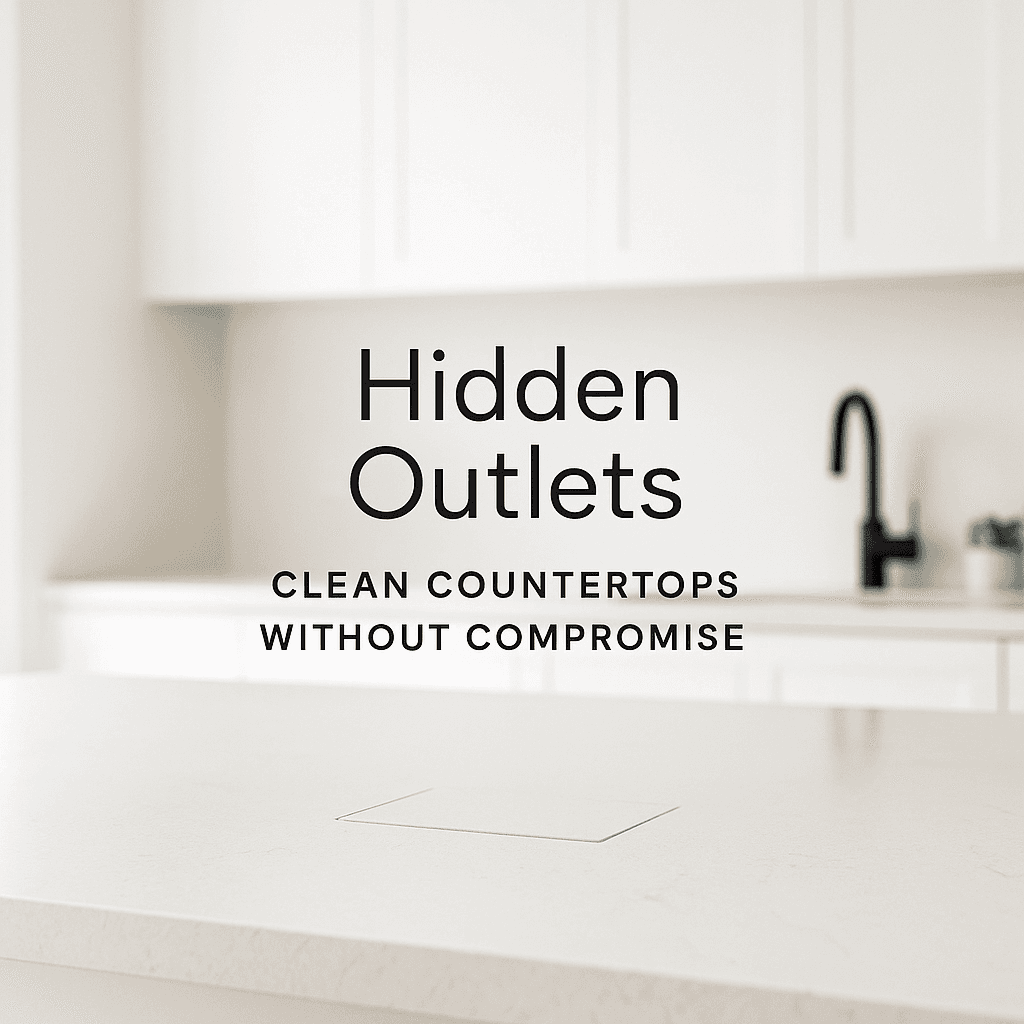
There’s this moment in almost every kitchen remodel where you think you’re done. Cabinets are in. Countertops are finally installed. The lighting looks right. Then you stand at the island with a phone charger in your hand and you go… wait.
Where do the outlets go.
Because the truth is, outlets are one of the fastest ways a clean, expensive countertop starts looking cluttered. The little plastic plates. The cords. The “temporary” power strip that somehow becomes permanent. It’s not a huge problem, but it is. Especially in a high-end kitchen where you’re paying attention to lines, symmetry, and materials.
Hidden outlets are one of those details that feel small until you live with them. Then you wonder why every kitchen doesn’t do it this way.
What people mean when they say “hidden outlets”
This is not one thing. Homeowners hear “hidden outlets” and picture a James Bond kitchen where the counter opens up and reveals a charging station. That does exist, but there are a few main categories, and each one solves a slightly different problem.
In real remodels, “hidden outlets” usually means:
- Pop-up outlets that rise from the countertop when you need power
- Under cabinet outlets tucked into the underside lip or even decorative ones
- Outlets hidden inside drawers, cabinets, appliance garages, or a pantry
- Flush mount outlets that sit nearly flat in the surface
- Toe kick outlets down near the floor for occasional use
- Power integrated into an island end panel or side detail so it isn’t facing the room
The goal is simple: keep power accessible without breaking the visual flow.
Why this matters more in a Naples style kitchen
In Naples, a lot of kitchens lean bright, open, and clean. Big islands. Quartz or quartzite slabs. Light cabinetry, sometimes to the ceiling. And usually, a layout that wants to feel calm.
So when you stick a couple of standard outlets right in the middle of a waterfall island, it can feel like a sticker on a luxury car. It works, sure. But you see it every day.
Hidden outlets let the materials do their job. The stone reads like stone. The backsplash reads like a single surface. And your “main view” angles stay uncluttered.
That’s the whole vibe.
The code part (yes, we have to talk about it)
You can’t just delete outlets because they’re ugly. The National Electrical Code has spacing rules for kitchens, especially along countertops and islands. Requirements can change based on layout, length of counters, whether an island qualifies, and what local interpretation looks like.
So the trick is not avoiding outlets. It’s meeting the requirement in a smarter way.
This is where working with an actual kitchen remodeling contractor matters, because the outlet plan has to be designed along with the cabinetry, backsplash, and lighting. Not after.
If you’re remodeling in Naples and you want a kitchen that looks intentional, it helps to talk through these details early with a builder who does high end work all the time. That’s basically the lane Cutting Edge Builds is in. Their local site is here: https://kitchen-remodeling-naples-fl.com/
Not a hard pitch. Just, it’s the type of project detail that’s easier when the team is used to it.
Option 1: Under cabinet outlets (the “why doesn’t everyone do this” solution)
Under cabinet outlets are one of the cleanest approaches for standard wall runs.
Instead of putting outlets in the backsplash tile or slab, they’re mounted under the upper cabinets, facing down, usually near the front edge so cords don’t fight you.
Pros:
- Your backsplash stays uninterrupted, which is a huge deal with full height stone or specialty tile
- They’re easy to access for small appliances
- From eye level, they basically disappear
Cons:
- You need uppers, obviously, so it’s not the solution for every wall
- Some people don’t love seeing cords drape down, but in practice it’s usually fine
- You need good planning so lighting, trim, and outlet placement don’t interfere with each other
If you’re doing a statement backsplash, this is often the move.
Option 2: Pop up outlets in the island (good, but do it carefully)
Pop up outlets can be great on an island where you need power for mixers, laptops, or that one person who always sets up their whole life on the counter.
They sit flush when closed, then rise when you press them.
Pros:
- You get island power without placing an outlet on the side panel
- Some models include USB C and USB A charging
- When closed, the island still reads clean
Cons:
- You’re cutting into your countertop, which is not nothing
- Spills happen. You need the right product and installer
- They can feel a bit “techy” depending on the finish
- Placement matters. If you put it in the middle of the prep zone, you’ll regret it
A good rule is to keep it out of your main work triangle area. Put it where people naturally sit, charge, or use small appliances, but not right where you’re chopping.
Option 3: Outlet in the island end panel (still hidden, just smarter)
This is kind of the “quiet professional” option.
Instead of facing the living room, the outlet goes on the end panel that faces a less visible direction. Or on the seating side but tucked near a leg detail so it doesn’t scream at you.
Pros:
- Meets code and works reliably
- No countertop cutouts
- Easy to service
Cons:
- It’s still visible
- If you choose the wrong location it becomes knee level cord chaos
If you’re doing a waterfall island, you can still do it, but it takes coordination with the stone fabricator and panel detailing. You don’t want an outlet plate fighting your waterfall seam line.
Option 4: Outlets inside drawers (the “appliance drawer” era)
This is one of my favorites for real life convenience.
You add power inside a drawer so you can charge devices or store appliances like a toaster, blender, or coffee gear. Some people do a “charging drawer” near the entry. Others do an “appliance drawer” near the prep zone.
Pros:
- Counter stays clear
- Devices charge out of sight
- Great for families and busy kitchens
Cons:
- Needs specific hardware and planning
- Heat producing appliances need ventilation considerations
- You still need the required countertop outlets elsewhere
This isn’t an outlet replacement. It’s a lifestyle upgrade. The kind you notice every day.
Option 5: Appliance garage with built in power
Appliance garages are back, and honestly, they make sense. Instead of leaving the toaster and espresso machine out, you give them a dedicated home with an outlet inside. You open the door, use the appliance, close it. Done.
You can explore some creative designs for these spaces in this Houzz article.
Pros:
- Keeps counters looking staged without actually being staged
- Power is right there
- Works especially well for coffee stations
Cons:
- Takes space
- Needs doors that don’t feel clunky
- You still need to think about ventilation and cord management
If you’re already doing custom cabinetry, this is an easy conversation to add early.

Flush outlets: the middle ground
Flush outlets sit nearly flat to the surface, usually in stone or wood. They’re not invisible, but they don’t have the bulky look of a standard receptacle plate.
They can work well in:
- Secondary prep counters
- Bar tops
- Offices built into kitchens
- Islands where pop up isn’t ideal
But. You still have to choose a finish that matches, and you need a product that holds up to kitchens. Cheap flush outlets tend to look worn quickly.
What to consider before you pick a solution
Here’s the part that saves money and headaches. Hidden outlet planning is not just “pick a product.”
It’s more like a checklist:
1. Where do you actually use power?
Not where you think you do. Where you really do. Coffee station, phone charging, holiday buffet line, laptop at the island, air fryer corner.
2. What surfaces are you protecting visually?
Full height slab backsplash? Special tile? Waterfall edges? Those are the areas where a visible outlet hurts the most.
3. Who lives here?
If you have kids, charging drawers and durable placement matter. If you entertain, island power matters. If you cook a lot, you need outlets in functional locations even if they’re hidden.
4. Maintenance and serviceability
Some hidden solutions are harder to replace if something fails. That’s not a dealbreaker. Just don’t pick something exotic with no support.
5. Lighting and trim conflicts
Under cabinet outlets and LED channels can fight for the same space. You need a plan, not a last minute improvisation.
The “clean countertop” formula that actually works
If you want a simple approach that fits most high end remodels, it usually looks like this:
- Under cabinet outlets for the main countertop runs (to protect the backsplash)
- One discreet island outlet (end panel or pop up depending on design)
- One charging drawer (optional but highly recommended)
- An appliance garage if you hate clutter and you use countertop appliances daily
That combination keeps you code compliant, functional, and visually clean. No weird compromises.
Talk to a remodeler before you pick the countertop
This is the part people don’t expect. Outlet placement affects stone seams, backsplash cuts, cabinet specs, even where you can put your sink or cooktop sometimes.
So if hidden outlets are important to you, bring it up early. Like, before final electrical. Before the tile is ordered. Before the stone is templated.
If you’re remodeling in Naples and want a team that will actually obsess over the details, it’s worth taking a look at Cutting Edge Builds through their local kitchen remodeling site: https://kitchen-remodeling-naples-fl.com/
You can request a consultation and just talk through the layout and options. Even that conversation will clarify what’s possible in your space.
Wrap up, because this is one of those small big decisions
Hidden outlets are not just a design trend. They’re a practical way to protect what you’re paying for. The stone. The tile. The clean lines. The calm feeling.
And yes, you still get power. You still plug in your mixer. You still charge your phone. You just don’t have to stare at outlet plates and cord tangles every time you walk into your kitchen.
That’s the point. Clean countertops without compromise.
FAQs (Frequently Asked Questions)
What are hidden outlets in kitchen remodels and why are they important?
Hidden outlets refer to power outlets designed to be discreetly integrated into kitchen spaces, such as pop-up outlets, under cabinet outlets, or outlets inside drawers. They help maintain a clean, uncluttered look on countertops and preserve the visual flow of high-end kitchens by keeping cords and outlet plates out of sight.
What types of hidden outlet solutions are commonly used in kitchen remodels?
Common hidden outlet options include pop-up outlets that rise from countertops, under cabinet outlets tucked beneath upper cabinets, outlets inside drawers or appliance garages, flush mount outlets nearly flat with surfaces, toe kick outlets near the floor, and power integrated into island end panels. Each serves different functional and aesthetic needs.
Why do hidden outlets matter more in Naples style kitchens?
Naples style kitchens often feature bright, open layouts with large islands and light cabinetry aiming for a calm, luxurious vibe. Visible standard outlets can disrupt the seamless look of quartz or quartzite surfaces and waterfall islands. Hidden outlets preserve the natural beauty of materials and keep main view angles uncluttered.
How does the National Electrical Code (NEC) affect outlet placement in kitchen remodels?
The NEC mandates specific spacing requirements for kitchen countertop and island outlets to ensure safety and accessibility. While you can’t eliminate required outlets due to aesthetics, these rules encourage smart planning to meet code while maintaining design integrity. Working with experienced remodelers helps integrate these requirements seamlessly.
What are the pros and cons of under cabinet outlets as a hidden outlet solution?
Under cabinet outlets keep backsplashes uninterrupted and are easy to access for small appliances while being nearly invisible from eye level. However, they require upper cabinets to install, may cause visible cords hanging down, and need careful coordination with lighting and trim to avoid interference.
What should I consider when installing pop-up outlets on a kitchen island?
Pop-up outlets provide convenient power access without visible side panel outlets and often include USB charging options. However, they require cutting into countertops, need proper sealing against spills, can feel techy depending on finish, and must be carefully placed away from main prep zones to avoid inconvenience during cooking.