
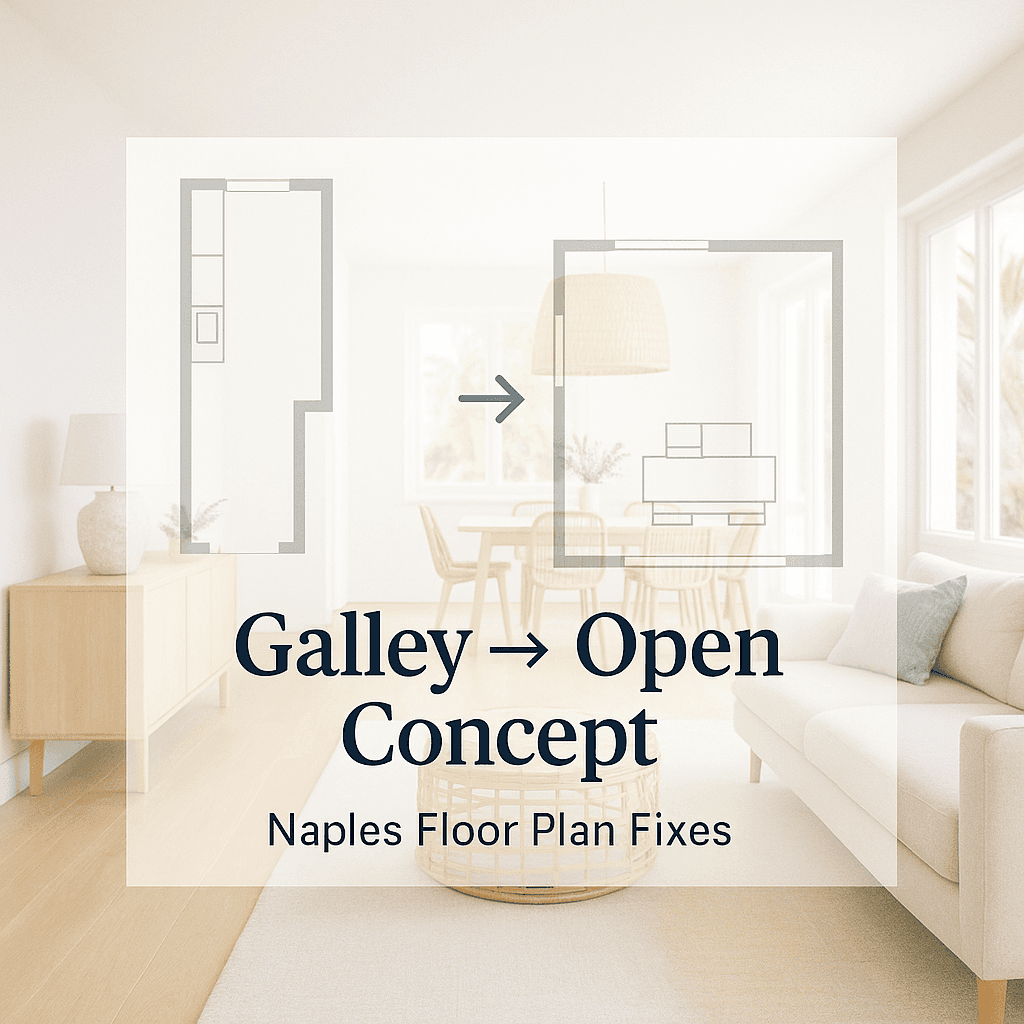
There’s a certain kind of kitchen layout I see a lot in Naples. You walk in and it’s… narrow. Two runs of cabinets facing each other, a tight walkway, maybe a pass through window to the living room that feels like it was added as an apology.
The galley kitchen.
And look, galleys can work. They can be efficient, even charming. But in a lot of Naples homes, especially older builds or condos that were designed for a different era, a galley ends up feeling like the house is telling you, quietly, to cook alone.
Most homeowners I talk to want something else. They want light. They want one space where people can hover, talk, snack, pour wine, do homework, pretend they are helping. They want open concept, but not the “rip every wall out and hope for the best” version of open concept.
This is about the fixes that actually work here. The common floor plan moves that turn a galley into something wider, more social, more modern, while still being smart about structure, HVAC, plumbing, and condo rules when those show up.
If you’re in Naples and you’re already thinking about a remodel, this is the kind of work Kitchen Remodeling Naples FL by Cutting Edge does every day. You can browse their approach and request a consult here: https://kitchen-remodeling-naples-fl.com/
Why galley kitchens feel extra tight in Naples homes
A few reasons it shows up so often:
- Older coastal layouts were built around smaller enclosed kitchens, more formal dining rooms, and less “entertaining while cooking.”
- Condos and villas often have stacked plumbing walls and limited ability to move drain lines.
- Ceiling heights and soffits in some properties make the kitchen feel boxed in, even when it is not tiny on paper.
- Traffic patterns are awkward. People cut through the kitchen to get to the lanai, the garage, the living room, the laundry. It becomes a hallway with appliances.
So the fix is not always “make it bigger.” Sometimes it’s “make it breathe.”
The real goal: open sightlines, better circulation, and a place to land
When people say open concept, they usually mean three things:
- I want to see the living area from the kitchen.
- I don’t want people bumping into each other.
- I want a counter where someone can sit or at least hang out.
You can get all three without a full gut job. Sometimes you just move one wall. Sometimes you steal 24 inches from a dining room that nobody uses.
And yeah, sometimes you do take down the wall. But you do it with a plan.
Floor plan fix #1: Take the kitchen wall down (but keep a “soft boundary”)
This is the classic move.
If your galley backs up to a living room or family room, removing the separating wall can instantly change the entire home. Suddenly, the kitchen isn’t a tunnel. It’s part of the space.
But. If you remove a wall and do nothing else, you can end up with a kitchen that feels exposed and kind of unfinished. Like the cabinets are just floating in a big room.
So what works better is a soft boundary:
- A peninsula that wraps out from one side of the galley.
- A low half wall with countertop overhang for seating.
- A ceiling detail (subtle beams, a lighting zone, a soffit done intentionally).
- Flooring transitions, sometimes. Not always. Naples homeowners often want one continuous floor, and that can look amazing.
Bonus: A peninsula can give you seating without requiring the clearances an island needs.
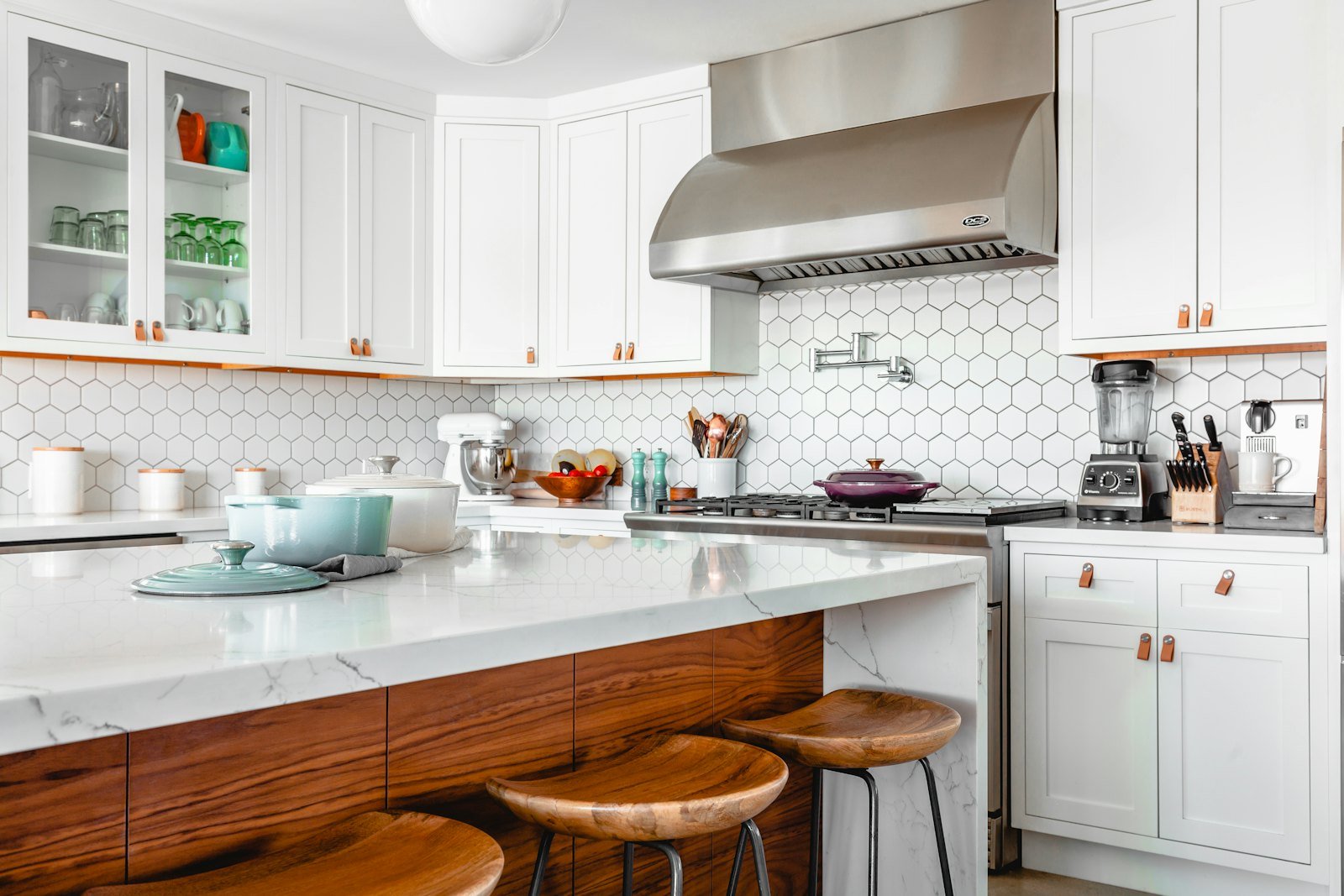
Floor plan fix #2: Convert the galley into an L shape (the underrated upgrade)
Not every kitchen needs to become a massive open room. Sometimes you just need to stop being a corridor.
Turning a galley into an L shaped layout is one of the cleanest fixes, especially when:
- One side of the galley can be shortened.
- The end of the kitchen can open into a breakfast nook, dining space, or living room.
What you’re doing is reducing the “bowling alley” effect and giving the kitchen a corner where it can breathe. It also helps you zone things properly, like:
- Cooking on one run.
- Prep and cleanup on the other.
- Pantry or tall storage on the short leg.
This is also a great option in condos where you can’t relocate plumbing easily. You can still open the space and modernize it without a full reroute.
Floor plan fix #3: Add a pass through that actually looks intentional
Pass through windows are common in older Naples homes. Some are tiny. Some have weird arches. Some are just… there.
But done right, a pass through can be a modern, architectural feature. Think:
- Wide horizontal opening aligned with countertop height.
- Full height cased opening that becomes a framed view into the living room.
- Bar style pass through with a thicker counter and seating on the other side.
If you can’t remove the full wall because it is structural or it contains mechanicals, a larger pass through gives you most of the openness without the full demolition.
Just don’t leave it as a little square hole with a dated ledge. If you’re going to keep it, make it feel like a choice.
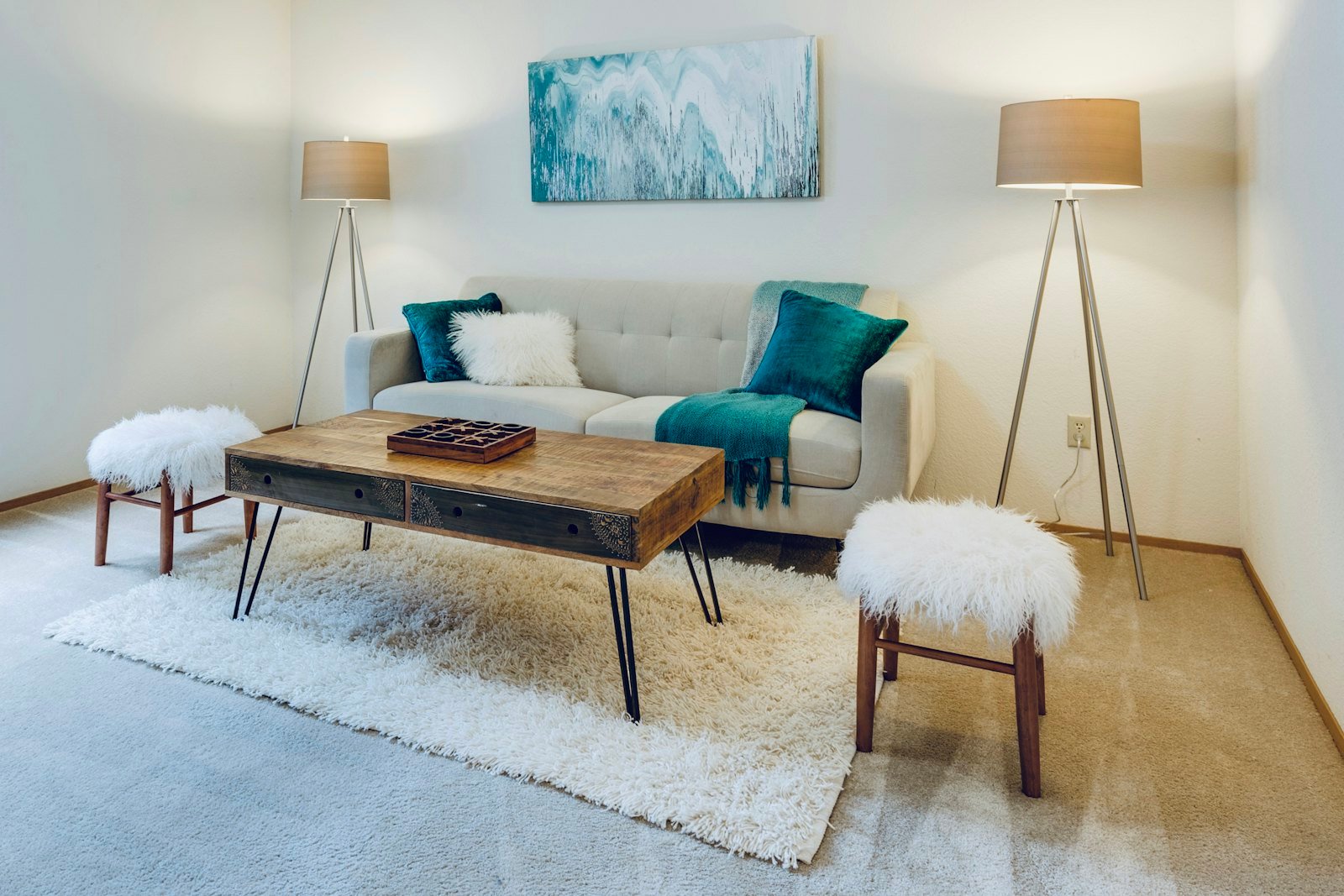
When considering these renovations, it’s worth exploring different design styles such as those found in mid-century modern homes, which often feature unique layouts and architectural elements that could inspire your own home improvement project.
Floor plan fix #4: Steal space from the dining room (because you never use it)
I’m going to say the quiet thing out loud.
A lot of formal dining rooms in Naples are basically staging areas. Nice chandelier. Big table. Nobody eats there unless it is a holiday or the in-laws are in town.
If your galley kitchen borders a dining room, you have options:
- Push the kitchen wall out 2 to 4 feet.
- Create a pantry wall plus coffee bar.
- Add an island or peninsula.
- Keep a smaller dining area that still works, just not oversized.
This one change can let you fit a proper fridge location, better clearances, and more counter space where you actually need it. And the kitchen becomes the “main room” again, which is what most people want now.
For more ideas on maximizing small kitchen spaces, check out these small kitchen ideas to steal for renters and renovators.
Floor plan fix #5: Relocate the fridge (yes, really)
A fridge in the wrong spot can make a kitchen feel 30 percent smaller.
In galleys, I often see the fridge at the end of the run, which creates a choke point. Someone opens the fridge door and suddenly nobody can pass. That is the whole kitchen.
Relocating the fridge to a more logical spot can open circulation without changing walls at all.
Common moves:
- Put the fridge on a tall pantry wall.
- Tuck it closer to the kitchen entry so it’s accessible without walking through the cooking zone.
- Use a counter depth fridge to reduce projection into the walkway.
This is the kind of floor plan fix that feels small until you live with it. Then you wonder how you ever did it the other way.
If you’re looking for more extensive renovations or changes in your home layout, it’s worth considering professional advice. There are many homebuilding forums where homeowners share their experiences and solutions regarding similar issues.
Floor plan fix #6: Swap a door for a wide cased opening
Sometimes the kitchen is blocked off not by a wall, but by a doorway. A narrow door into the dining room. A cramped opening into the hallway.
Widening that opening, and trimming it cleanly, is a fast way to make the kitchen feel connected. It also helps with light, especially if the living area has bigger windows or sliders to the lanai.
You don’t always need to open everything. You just need better connections between rooms.
Floor plan fix #7: Build a real pantry (so you can stop hoarding on countertops)
Open concept kitchens look great in photos. They also expose clutter.
In a lot of galley kitchens, there is nowhere for:
- Small appliances
- Bulk items
- Snacks
- Paper goods
- The stuff you don’t want to see
So the counters become storage. Which makes the kitchen feel smaller. Which makes you want to remodel again in two years.
A pantry wall, a tall cabinet run, or even a shallow reach in pantry can change the entire day-to-day feel of the space. And if you are stealing space from an adjacent dining room or hallway, this is one of the best ways to spend it.
A quick reality check: what stops “open concept” in Naples
Before you get too attached to a specific layout, here are the common constraints that show up locally:
- Load bearing walls. You can often still open them, but it may require a beam and proper engineering.
- Plumbing stacks in condos. Moving sinks and dishwashers far from the existing drain can be difficult or expensive.
- HVAC returns and supply runs hidden in soffits or chases.
- HOA rules and permits. Especially in condo buildings, there can be restrictions on work hours, approvals, and even what can be changed.
This is why it helps to talk to a remodeler who does Naples projects all the time, not someone guessing from a generic template.
If you want to talk through what’s possible in your specific home, you can start here: https://kitchen-remodeling-naples-fl.com/
My favorite “open concept” layout for former galleys (when space allows)
If you have the room, here is a layout that tends to feel perfect:
- One long wall becomes the main cabinet run with range and hood.
- The opposite run gets reduced or removed.
- A peninsula (or small island) becomes the gathering spot.
- Sink and dishwasher face outward when possible, so you’re not staring at a wall.
- Pantry and fridge live on a tall storage wall.
This gives you openness without losing function. Because that’s the thing. You can make a kitchen open and still make it work like a kitchen.
If you’re planning a remodel, do this first (before picking finishes)
People usually start with countertops. Or cabinet colors. Or they save screenshots of a kitchen in California with 14 foot ceilings.
But the layout is the whole game.
Before you pick finishes, figure out:
- Where people walk through the space.
- Where you want seating, if any.
- Where the sink should be so you’re not isolated.
- Whether you need a bigger pantry.
- Whether an island is realistic or just something you want because Instagram told you.
A good remodeling team will walk the house, ask how you live, and then show you options. Not just one option. Options with tradeoffs.
That’s the difference between a kitchen that looks new and a kitchen that feels right.
Wrap up
Going from galley to open concept in Naples is rarely one single move. It’s usually a handful of smart edits. Remove a wall, or widen an opening. Rework the layout into an L shape. Add a peninsula. Fix the fridge location. Build storage so the counters stay clean.
If you’re ready to explore what makes sense for your home, and you want it done with real planning and craftsmanship, check out Kitchen Remodeling Naples FL by Cutting Edge and request a consultation here: https://kitchen-remodeling-naples-fl.com/
FAQs (Frequently Asked Questions)
Why do galley kitchens feel especially tight in many Naples homes?
Galley kitchens are common in Naples due to older coastal layouts featuring smaller enclosed kitchens, stacked plumbing walls in condos and villas limiting drain line movement, lower ceiling heights and soffits creating a boxed-in feel, and awkward traffic patterns turning kitchens into narrow hallways.
What do homeowners in Naples typically want instead of a traditional galley kitchen?
Most homeowners desire more light and an open concept space where people can gather, talk, snack, pour wine, do homework, or help with cooking — essentially a wider, more social and modern kitchen rather than a narrow corridor.
How can removing a kitchen wall improve a galley kitchen layout?
Taking down the wall between the galley kitchen and living or family room opens sightlines and integrates the kitchen into the home. To avoid feeling exposed or unfinished, adding soft boundaries like a peninsula, low half wall with seating, ceiling details, or flooring transitions helps define the space while maintaining openness.
What is an effective alternative to fully opening up a galley kitchen?
Converting the galley into an L-shaped layout is an underrated upgrade that reduces the corridor effect by shortening one side of the galley and opening it into adjacent spaces like a breakfast nook or dining area. This creates zones for cooking, prep, and storage without extensive plumbing relocation.
How can pass-through windows be used to enhance openness in Naples kitchens?
Intentional pass-throughs with wide horizontal openings aligned at countertop height or full-height cased openings framed as architectural features provide visual connection between kitchen and living areas. Bar-style pass-throughs with seating add social spots without requiring full wall removal.
Can you achieve open concept kitchens in Naples without major demolition?
Yes. Many successful open concept renovations involve strategic moves like removing one wall with soft boundaries, converting layouts to L-shapes, or enlarging pass-through windows. These fixes improve circulation and sightlines while respecting structural elements, HVAC, plumbing constraints, and condo rules.