
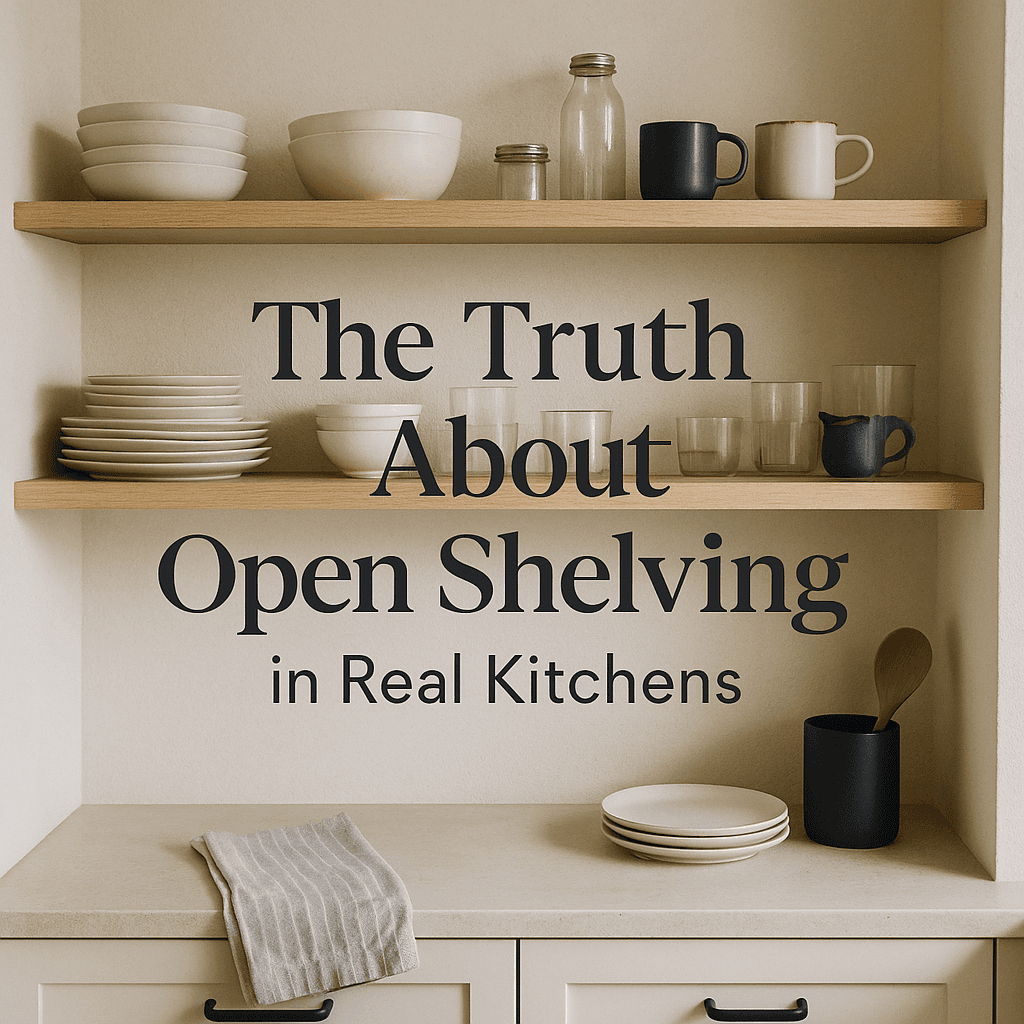
Open shelving looks amazing in photos. It really does.
A couple of floating wood shelves, some white dishes stacked just so, maybe a little plant, a cookbook turned outward like it lives there on purpose. It feels light. Airy. Like your kitchen suddenly has more space than it did yesterday. In fact, open shelving can make a kitchen feel bigger, especially if you have a smaller footprint or low ceilings.
But here’s the part nobody says out loud until they have to actually live with it.
Open shelving is not just a design choice. It’s a lifestyle choice. And in real kitchens, with real cooking, real kids, real humidity, and real clutter, it can either be awesome or… kind of exhausting.
So let’s talk about it plainly. No “Pinterest-perfect” fantasy version. Just what open shelving is like after 6 months, a few dinner parties, and a normal amount of daily chaos.
What people think they’re getting (and what they’re actually getting)
People usually want open shelving for one of a few reasons:
- They want the kitchen to feel bigger.
- They hate upper cabinets (or they think they do).
- They want to show off pretty dishes and glassware.
- They want a modern, clean, slightly coastal look (Naples homeowners… yes, this is a thing).
And those are all valid.
Open shelving can make a kitchen feel less boxed-in, especially if you have a smaller footprint or a layout that’s already a bit tight. It can also help break up heavy cabinetry in a big kitchen so it doesn’t feel like a wall of wood.
But what you’re actually getting day-to-day is:
- More visual “stuff” in your line of sight.
- More cleaning.
- Less forgiveness for mismatched items.
- Less hidden storage for the ugly (and we all have ugly kitchen stuff).
That doesn’t mean “don’t do it”. It just means do it with your eyes open. Shelves are not neutral. They ask something from you.
The biggest truth: open shelves show everything (including the things you don’t notice yet)
This is the first shock for most people.
Cabinets hide your mess. Shelves frame it.
That stack of bowls you thought was fine? Now it’s the first thing you see when you walk in. The mug collection you swear you’ll someday declutter? It’s now your kitchen’s personality.
And if you cook a lot, you probably own:
- 17 random cups from trips, gifts, and “temporary” mugs
- plastic containers that don’t match
- the one chipped plate you can’t bring yourself to toss
- spices in three different bottle styles
Open shelving forces a decision. Either curate your kitchenware, or accept that the kitchen will look busy. You might want to consider a declutter game to make this process easier.
Some people are totally fine with “busy”. But if you’re aiming for calm, minimal, clean lines, open shelves can fight you.
Dust and grease are real. Especially in Florida.
Let’s just be honest for a second. Kitchens are not clean rooms. They’re grease rooms.
Even if you don’t fry food, cooking puts a fine layer of residue into the air over time. Add Naples humidity, air flow, and the fact that many homes here lean open concept, and shelves get grimy faster than you think.
The stuff on your shelves will collect:
- dust
- cooking oils
- occasional splatters
- that slightly sticky film that shows up one day and you’re like… wait, when did this happen?
If your shelves are near the range and you don’t have a properly vented hood, it gets worse. Way worse.
Realistic expectation: if you want open shelves to look good long-term, you’ll be wiping them down. And washing the items on them more often than you did when they lived behind doors.
You lose storage faster than you expect
A typical upper cabinet can hold a lot. Like, a lot.
Open shelves don’t hold “a lot” in the same way, because you don’t want to stack things too high, too deep, or too awkwardly. If you do, it looks cluttered and it becomes annoying to use.
Also, you usually can’t use the full height comfortably unless you’re okay with step stools, and most people aren’t, not for daily stuff.
So if you remove uppers completely and replace them with shelving, you need to have a plan for where everything goes now.
That plan might be:
- deeper base cabinets
- more drawers (drawers solve a lot of problems, honestly)
- a pantry upgrade
- a coffee bar cabinet zone
- a tall cabinet wall somewhere else
But it needs to be planned. Otherwise open shelves feel great for a week and then you’re trying to figure out where the blender goes.
The “right” way to do open shelving (in a way that doesn’t make you regret it)
Open shelving works best when it’s not trying to do the job of all your cabinetry.
The sweet spot for most real kitchens is:
1) Use open shelves in one focused zone
For example:
- a beverage station
- a baking zone
- a prep wall that’s away from the range
- a sink wall where you want it to feel lighter
Doing it everywhere tends to turn into visual noise.
2) Put shelves where you naturally reach for those items
Plates near the dishwasher. Cups near the coffee maker. Mixing bowls near the prep area.
If you have to cross the kitchen to grab a mug, shelves become decorative instead of functional. Which is fine. Just admit it.
3) Pick shelf materials that can handle real life
Sealed wood, properly finished. Or metal. Or stone. Something that won’t warp, stain, or look tired fast.
And please, use brackets or supports that are actually rated for the weight you’ll put on them. Dishes are heavy.
4) Keep the “display items” limited
The best-looking open shelves are usually 70 percent practical, 30 percent styled.
A few stacked plates. A few bowls. Matching glasses. Then one or two “nice” things.
If every shelf is styled like a showroom, it stops being a kitchen. And it’s hard to maintain.
A quick example that actually works (a layout we see a lot)
A really common Naples remodel setup goes like this:
- lower cabinets and drawers for storage
- a range wall with a statement hood (and yes, vented properly)
- either cabinets or open shelves on the sides of the hood, not both
- a tall pantry cabinet run to make up storage
This way you get the open feel, you still have storage, and you don’t end up with dusty spice jars above your cooktop.
Open shelves vs glass-front cabinets (the quieter alternative)
If you like the idea of “lighter” upper storage but don’t want the maintenance, glass-front cabinets can be the compromise.
They:
- reduce visual heaviness
- still hide grease and dust better than open shelves
- let you display nicer dishes without exposing everything
You can even do reeded glass, seeded glass, or tinted glass if you want a little blur. Enough to soften the chaos.
Who open shelving is actually best for
Open shelving tends to work best for:
- people who keep a tight kitchen inventory (not minimalists necessarily, just organized)
- households that don’t cook heavy grease meals every day
- homeowners who enjoy styling, curating, and keeping things “put away”
- kitchens with good ventilation and a thoughtful layout
And it’s usually a headache for:
- big families with a lot of stuff
- anyone who hates wiping things down
- people who want a kitchen to look “clean” without effort
- homes where the shelves end up near the range with weak ventilation
Not a moral judgment. Just how it plays out.
Cost: is open shelving cheaper?
Sometimes. But not always.
Yes, you might save money by removing upper cabinets. But:
- nice shelves (thick wood, stone, custom finish) cost money
- proper supports cost money
- backsplash sometimes expands upward (more tile cost)
- the wall needs to be finished nicely because it’s visible now
- lighting becomes more important
And if you later decide you hate it, adding cabinets back is not always simple. Especially if plumbing, electrical, or tile decisions were made around the open plan.
The “middle path” that almost always makes people happiest
If you’re on the fence, here’s the approach that tends to satisfy the most homeowners:
- keep uppers in most places
- add open shelves in one visually important area
- use those shelves for daily-use pretty items (not junk storage)
- plan drawers and pantry storage so you’re not forcing everything onto the shelves
It gives you the look. But it doesn’t demand that your entire kitchen become a display case.
Suggested images to include (and where they go)
Image 1 (near the top)
A bright modern kitchen with a small section of open shelving (not the whole kitchen), styled with simple dishes.
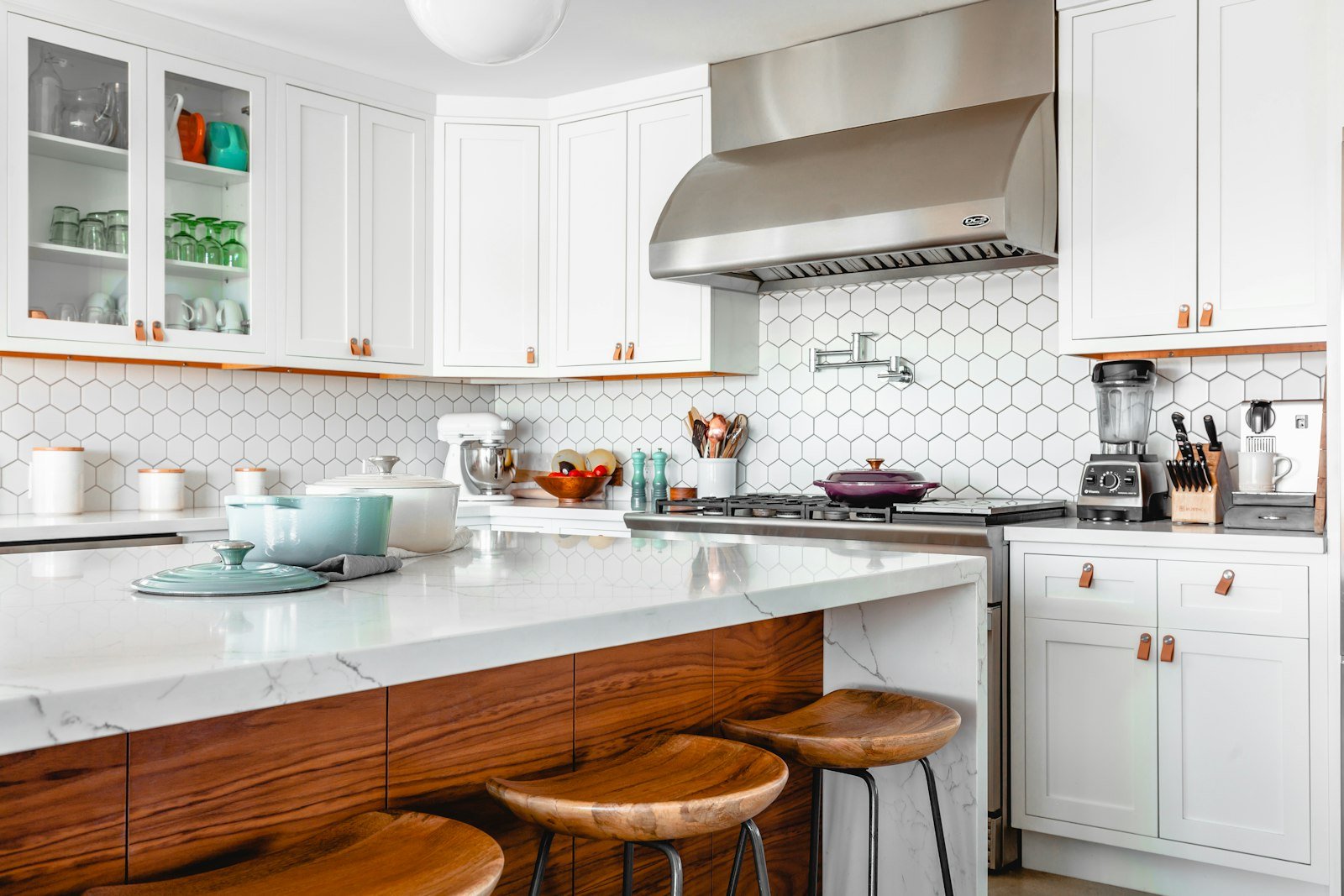
Image 2 (dust and grease reality)
A close-up of open shelves near a cooking area, showing dishes and jars. Something “real” and lived-in.
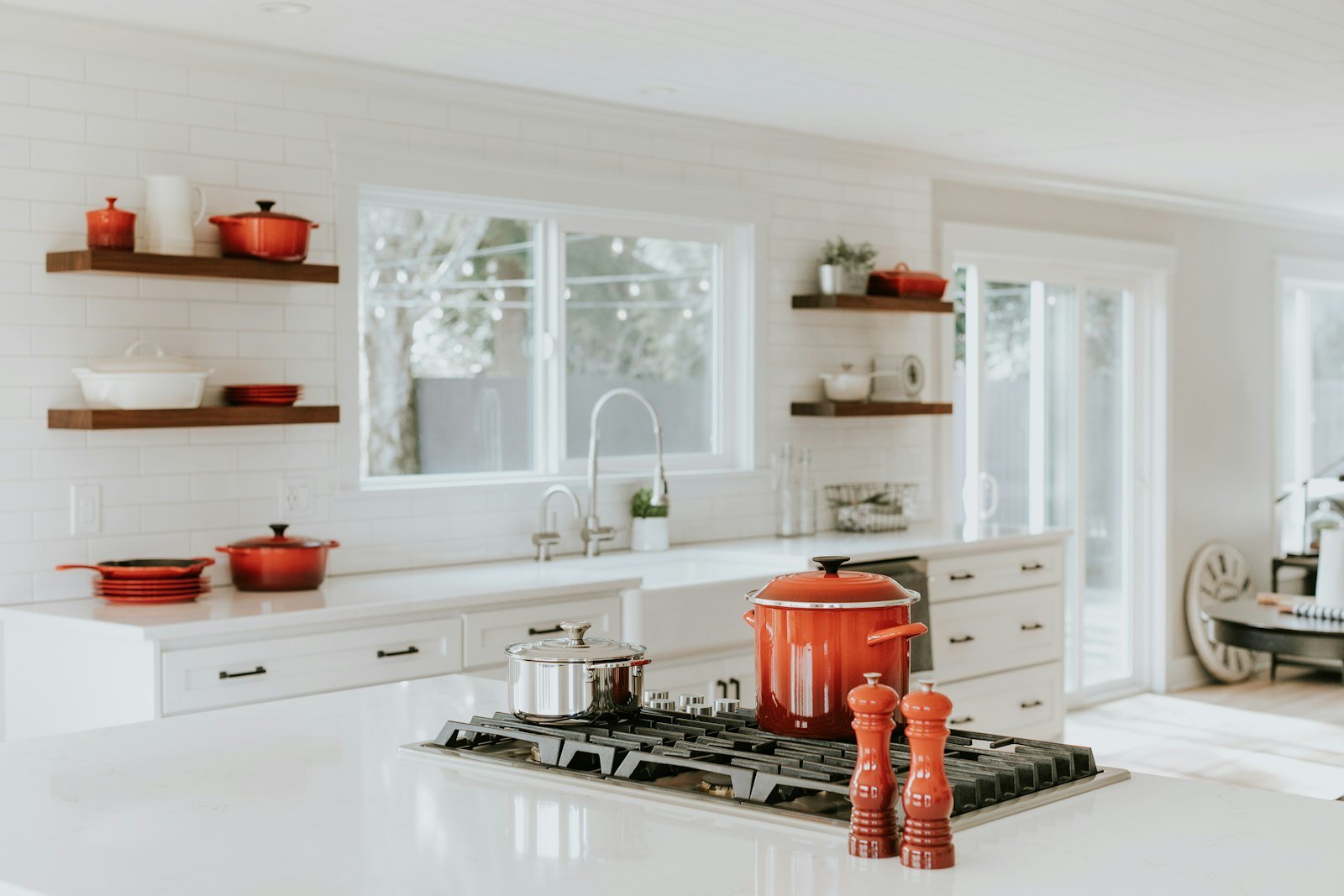
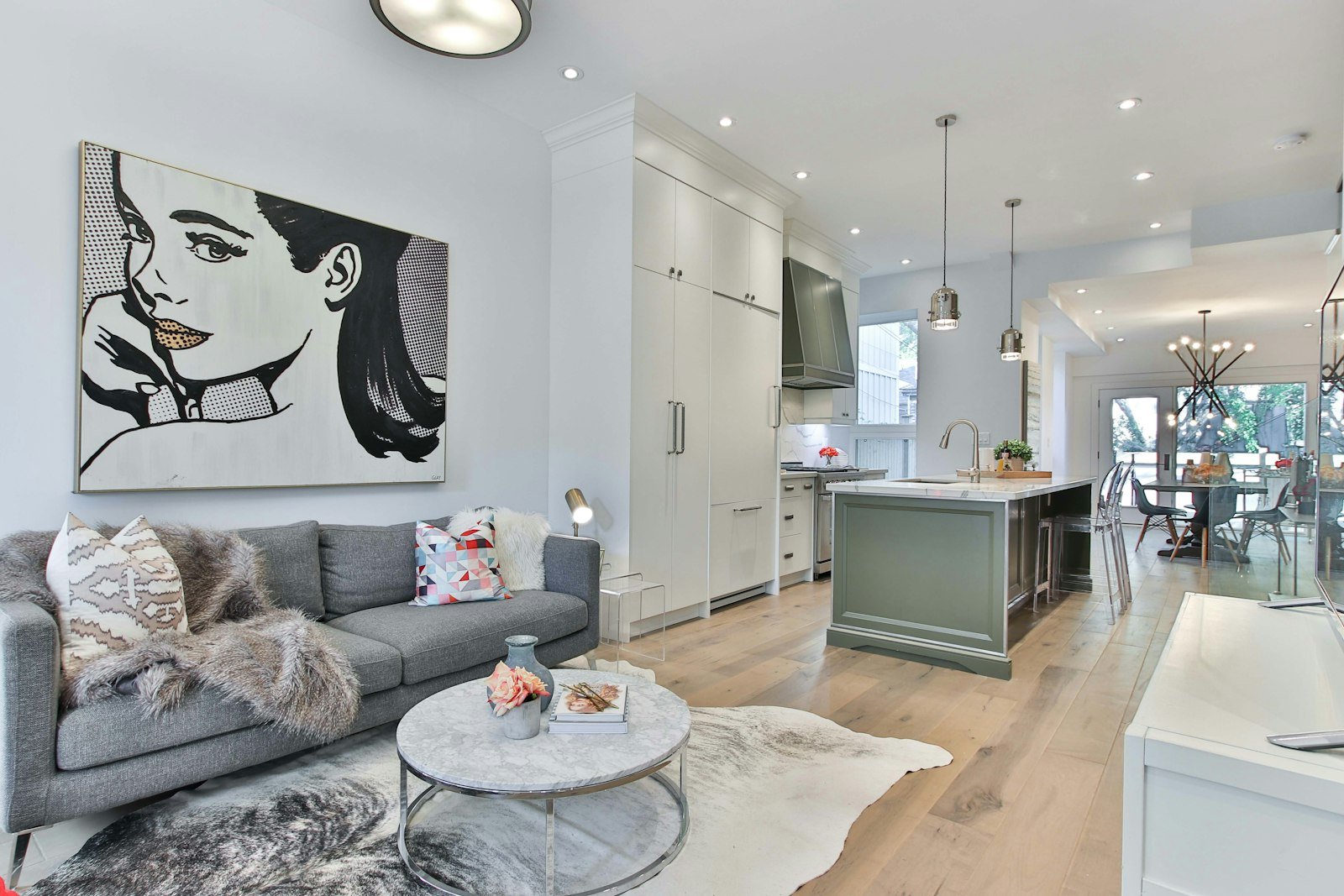
Image 3 (alternative option)
Glass-front cabinets or a kitchen that mixes closed storage with one open shelf section.
If you’re remodeling in Naples, this is the part to get right
Open shelving isn’t “in” or “out”. It’s just a tool. The mistake is treating it like a default upgrade.
In a real kitchen remodel, the question isn’t do open shelves look good.
It’s:
- Where will your storage come from instead?
- What’s your cooking style?
- How good is your ventilation plan?
- What will the kitchen look like on a random Wednesday, not on reveal day?
If you want help thinking that through before you commit, that’s exactly the kind of design and execution detail we deal with every day.
If you’re in the Naples area and planning a kitchen renovation, you can check out Kitchen Remodeling Naples FL by Cutting Edge here: https://kitchen-remodeling-naples-fl.com/ and request a consult. Even if you’re still early. Sometimes one good conversation saves you from a decision you only notice was wrong after the shelves are up.
Bottom line
Open shelving can be beautiful. It can also be annoying. Sometimes both.
Do it if you want a lighter look and you’re willing to curate and clean a bit more. Skip it if you want your kitchen to forgive you for being human.
And if you’re not sure, do a hybrid. Most people end up happier there.
FAQs (Frequently Asked Questions)
What are the main reasons people choose open shelving in their kitchens?
People usually opt for open shelving to make their kitchen feel bigger, because they dislike upper cabinets, to showcase pretty dishes and glassware, or to achieve a modern, clean, slightly coastal look.
How does open shelving affect the perception of space in a kitchen?
Open shelving can make a kitchen feel less boxed-in and more spacious, especially in smaller kitchens or those with low ceilings. It helps break up heavy cabinetry and creates an airy, light atmosphere.
What are some practical challenges of living with open shelving in a real kitchen?
Open shelving requires more cleaning due to dust, grease, and cooking residues; it exposes clutter since there is less hidden storage; it demands careful curation of kitchenware to avoid a busy look; and it offers less storage capacity than traditional cabinets.
Why does open shelving require more frequent cleaning compared to cabinets?
Kitchens accumulate dust, cooking oils, splatters, and sticky films over time. Open shelves and the items on them are exposed to these elements directly, especially near cooking areas without proper ventilation, necessitating regular wiping and washing.
How should one plan storage when replacing upper cabinets with open shelves?
Since open shelves hold less and stacking items too high or deep leads to clutter, it’s important to compensate with deeper base cabinets, additional drawers, pantry upgrades, or specialized cabinet zones for appliances to maintain functional storage.
What is the recommended approach to incorporating open shelving without regret?
Open shelving works best when used in one focused zone—such as a beverage station, baking area, prep wall away from the range, or sink wall—to avoid overwhelming the space and maintain balance between aesthetics and practicality.