
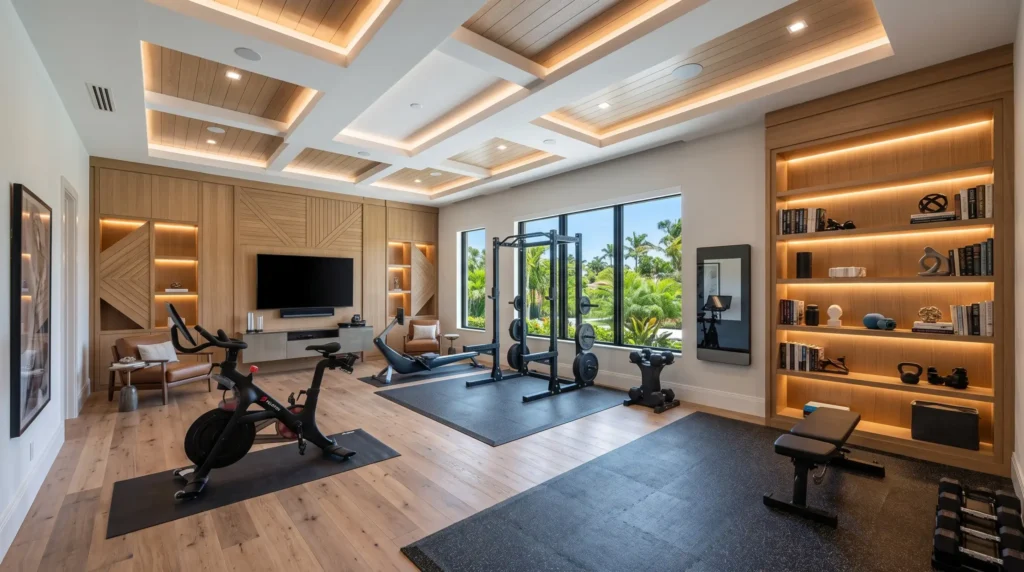
Music Room Ideas
Sound, Storage and Power
A well-built music room handles three jobs: it holds sound in, it sounds good from the inside, and it keeps instruments safe. Soundproofing is a matter of mass, sealed gaps and walls, ceilings and doors that are decoupled. Acoustic treatment is its own step, using absorption panels and diffusers to tame echo. On top of that, keep humidity steady for guitars and pianos, give gear wall hangers and cabinets, run plenty of outlets on clean circuits, and add light bright enough to read a score. With the right door and wall upgrades, most spare bedrooms make the switch nicely.

How Do You Make a Room That Sounds Right?
First, pull apart two ideas people tend to blur together. Soundproofing keeps noise from getting out of the room or coming in, and it relies on mass and isolation: a solid-core or exterior-rated door sealed all the way around, an extra layer of drywall with damping compound between, isolation clips or resilient channel that separate the drywall from the studs, and acoustical caulk at every seam and outlet. Acoustic treatment is about how the room sounds to you inside it, with absorption panels at the reflection points, bass traps in the corners and diffusers along the rear wall.
After that, plan the layout and the gear. Put a piano on an interior wall, clear of windows and supply vents; give a drum kit the most isolated corner and a floor that won’t pass vibration to the room next door. Guitars stay safe and within reach on wall hangers, and a shelved closet can hold amps, cases and sheet music. Install more outlets than seem necessary, preferably on a dedicated circuit, and run data lines for recording equipment. It is worth specifying dimmable LED fixtures that don’t buzz.
| Upgrade | What it does | Effect |
|---|---|---|
| Solid-core door with seals | Seals off the weakest spot in most rooms | Big improvement for the money |
| Second drywall layer with damping | Adds mass and cuts vibration | Noticeably quieter walls |
| Isolation clips or resilient channel | Decouples drywall from framing | Improved low-frequency control |
| Acoustic panels and bass traps | Soak up reflections inside the room | Clearer sound, but noise still gets out |
| Humidity control | Keeps wood instruments stable | Protects guitars, pianos and strings |
| Dedicated circuit | Clean power for recording gear and amps | Less hum and fewer tripped breakers |
Browse the specialty rooms we create from spare bedrooms, including music and hobby rooms, offices and theaters.
What Matters in a Florida Music Room?
In this climate, humidity is the greatest threat to instruments. Acoustic guitars and pianos are happiest when relative humidity holds fairly steady, and plenty of technicians recommend a range of roughly 40 to 50 percent. That’s simple while the AC is on but tough once seasonal owners head north for the summer, so look at a dehumidify setting on the thermostat or a separate unit in the room. Store instruments away from exterior block walls and out of the direct sunlight coming through the lanai sliders.
Since concrete block exterior walls already stop a good deal of sound, the effort in most Southwest Florida homes goes into the interior walls, the ceiling and the door. In a condo or two-story house, the floor counts as well: a floating isolated floor, or a thick pad and rug on top of tile, cuts the footsteps and drumming that travel down. Condo associations in Naples and Marco Island may set rules on noise and flooring, and new circuits require an electrical permit. Supply and return vents often leak sound, so we reroute or line the ducts serving the music room and keep the air conditioning quiet enough that it stays off your recordings.

Music Room Before &
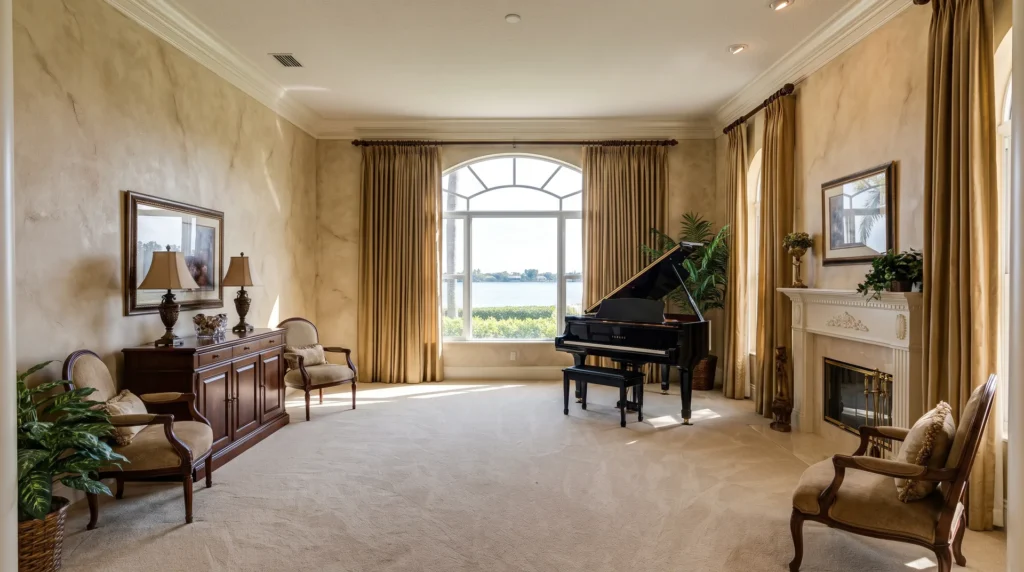
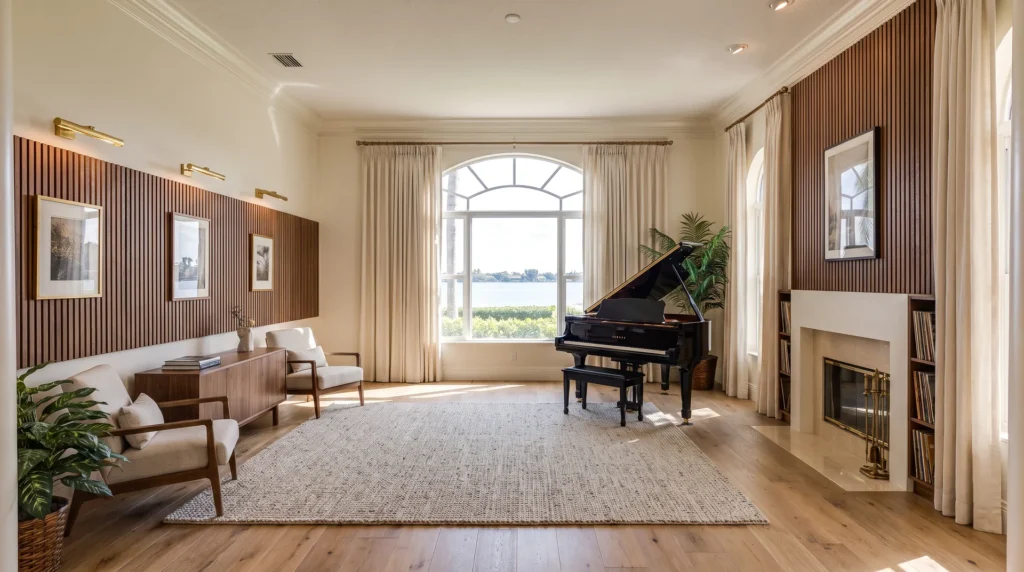


Music Room Questions
How is soundproofing different from acoustic panels?
Soundproofing stops sound from traveling through doors, floors and walls by relying on mass, decoupling and airtight seals. Acoustic panels are mounted on surfaces and absorb reflections, making the room sound clearer. Panels by themselves won’t keep the neighbors from hearing a drum kit, so most rooms need both.
Can I turn a spare bedroom into a music room?
Yes, and plenty of homeowners do. A better door, a second layer of drywall on shared walls, sealed outlets and acoustic panels typically make a large difference. A room above living space may also need its floor treated, and drummers might want framing that is isolated.
What music room ideas work in a small space?
Hang instruments on the wall rather than using floor stands, store amps and cases in a closet with shelves, pick a compact upright or a digital piano, and mount acoustic panels that also work as art. In a small room, one corner bass trap and a rug go a long way, and solid task lighting makes practice sessions comfortable.
After scanning your room, we lay out the soundproofing, render the result for you and set one fixed price.
More in Spare Room & Bonus Room Conversions
Why Musicians Call Cutting Edge
Soundproofing succeeds only when each gap is sealed, each layer is detailed and the door is picked carefully. Cutting Edge Kitchen & Bath is a licensed Florida general contractor serving Naples and Marco Island, backed by nine Best of Houzz awards and more than 500 remodels across Southwest Florida; our 4,000-square-foot showroom is in Bonita Springs, on Old 41 Road. A free LiDAR scan maps your room, a photo-real 3D render shows the finished space, and our own crews take care of the walls, door, electrical and finishes from beginning to end on a single fixed-price contract.