

Home Bowling Alley
What It Takes to Build
A home bowling alley calls for a long, level and structurally sound space. From foul line to head pin, a regulation lane measures 60 feet, and once the approach and pinsetter area are added the total run is often well over 75 feet. Residential lanes that are shorter, and mini-bowling systems, need less room. Beyond the lane surface, you need a pinsetter, ball return, masking, scoring and sound control. Large estates, basements and custom additions planned around the lane are where most home lanes end up.
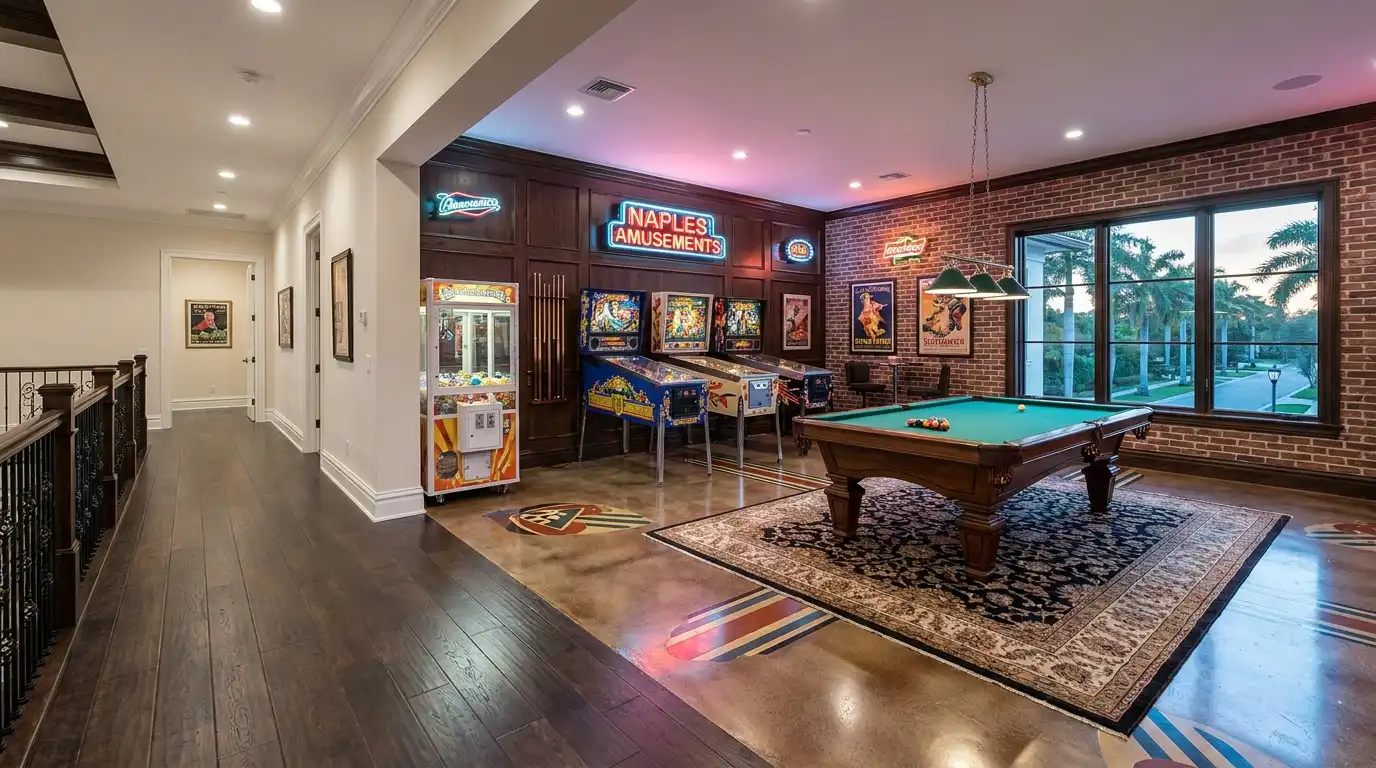
What Does a Residential Bowling Lane Require?
The first question is length. A full lane combines an approach of roughly 15 feet, the 60-foot lane itself and a pit for the pinsetter, which adds more. Every lane is about 42 inches wide before gutters and room for the ball return and capping. Short lanes and duckpin or mini-bowling systems cut the footprint down and work in game rooms that can’t spare 80 feet. Because the floor has to be flat and level to tight tolerances, specialist lane companies typically install the lanes over a carefully prepared substructure.
Choosing the pinsetter is the big equipment decision. Homes often use string pinsetters, which are simpler and need less upkeep than traditional free-fall machines. Compared with wood, a synthetic lane surface forgives more and wears well. Scoring, lighting and seating, plus a ball rack and a lounge or bar, finish the room. Bowling is loud, so the walls, ceiling and floor all need sound control, particularly near bedrooms. Working out HVAC, electrical and service access early prevents rework.
| Component | Typical requirement | Notes |
|---|---|---|
| Lane length | 60 ft regulation; shorter options exist | Mini and duckpin lanes suit smaller rooms |
| Total run | Frequently well over 75 ft including approach and pit | Measured before any design work |
| Lane width | About 42 in plus gutters | Allow room for ball return and capping |
| Pinsetter | String or free-fall | Homes often choose string systems |
| Lane surface | Synthetic or wood | Synthetic is lower maintenance |
| Room needs | Level slab, HVAC, power, sound control | Set by specialist lane installers |
Look at our game room packages: billiards, shuffleboard, simulator bays and custom bowling lanes.
Does It Fit a Southwest Florida Estate?
With basements uncommon in this area, a home bowling alley usually ends up in a big addition, a detached building or a conversion of an oversized garage. That brings in setbacks, limits on lot coverage and wind requirements under the Florida Building Code, and, inside flood zones, elevation plus the 50 percent rule from FEMA. Estates in Naples communities like Port Royal, Quail West or Grey Oaks may have enough land, but any new structure still goes before the architectural review board.
Slab work makes or breaks the lane, since it needs a flat, stable base, and local soils and the water table call for careful engineering. Humidity affects wood lanes, equipment and electronics, so the room has to be fully air-conditioned and dehumidified. For most homes, a shorter residential lane or a mini-bowling setup inside the game room is more practical than a full 60-foot regulation lane. Our game room packages begin at $14,000; a bowling lane, though, is priced as a custom project once we have reviewed the site and heard from the lane company. That review tells you up front which option your lot can take: a full lane, a shorter one or a mini system.

Home Bowling Alley Before &


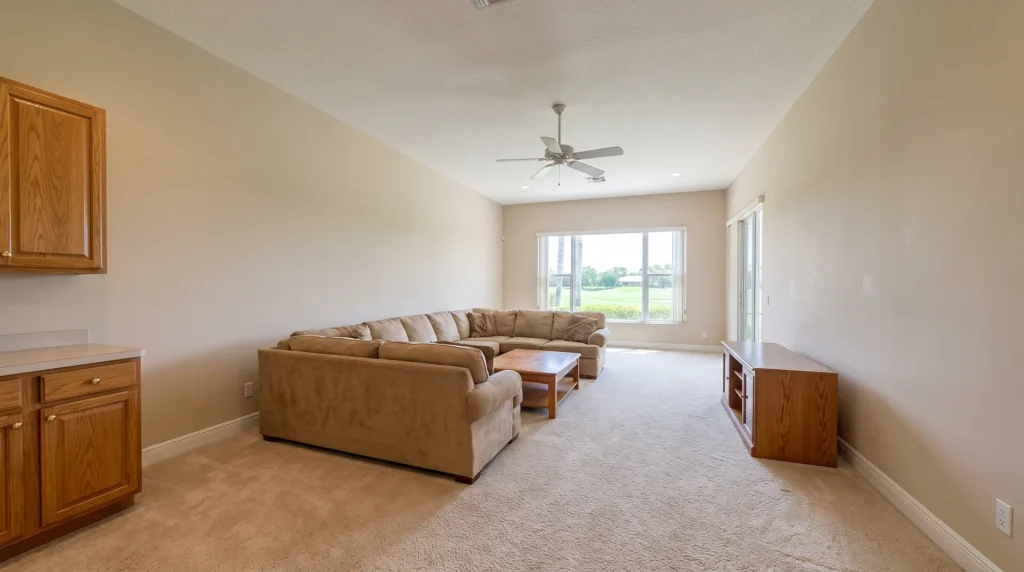

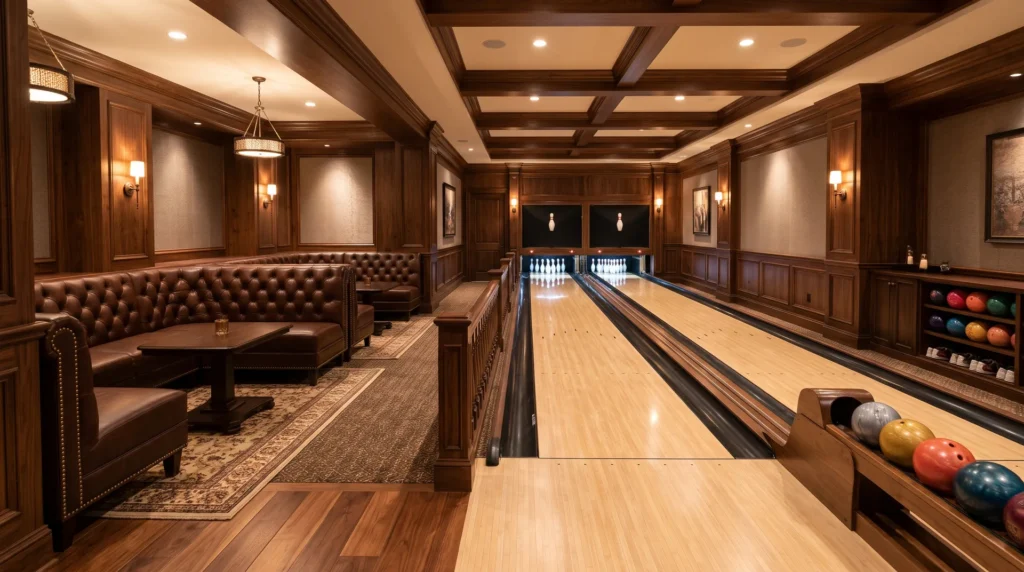
Home Bowling Alley Questions
How much room does a home bowling alley need?
Foul line to head pin on a regulation lane is about 60 feet, and with an approach and a pinsetter area added, the total space often tops 75 feet. Width runs about 42 inches per lane plus the gutters and ball return. Shorter residential lanes and mini lanes fit in much less room.
What does a string pinsetter do?
Instead of sweeping and dropping loose pins, a string pinsetter resets pins that are tied to strings. That makes it simpler, quieter and lower-maintenance, which is why it is popular in homes. The pins react a little differently than they do on commercial free-fall machines, so try one before you commit.
Can a Florida home without a basement have a bowling lane?
Yes. Most home lanes in Florida go into an addition, a large bonus space or a separate structure built on a slab. That slab has to be carefully engineered and leveled, and you will need permits, sound control and air conditioning for the room. We go over the site and your options at the consultation.
Describe your space; after a site review we will render the lane and lay out the build plan.
More in Home Game Room & Billiards Room Ideas
Why Estate Owners Call Cutting Edge
Everything surrounding a home bowling lane decides how well it plays: slab, structure, cooling and permitting. As a licensed Florida general contractor, Cutting Edge Kitchen & Bath manages those pieces and works alongside specialist lane installers. Our Naples office serves Naples and Marco Island, and our 4,000-square-foot showroom sits at 28280 Old 41 Road in Bonita Springs. We have finished more than 500 Southwest Florida remodels and won nine Best of Houzz awards. To see whether a lane will fit, we start with a free LiDAR scan and photo-real 3D render, and a single fixed-price contract covers the entire build.