

Infrared vs Traditional Sauna
Which One to Build
In a traditional sauna, an electric heater and a bed of rocks warm the air to about 150 to 195°F, and ladling water over the rocks sends up bursts of steam. An infrared sauna uses radiant panels to heat your body itself while the room air stays cooler, frequently 120 to 150°F. Infrared comes up to temperature sooner and smaller models often run on 120V; a traditional room generally calls for a dedicated 240V circuit and takes longer to warm. Decide based on the heat you like, the room available and your electrical service.

How Do Traditional and Infrared Saunas Stack Up?
The biggest gap is how each one feels. Traditional saunas wrap you in hot air, and tossing water on the stones lifts the humidity for a few minutes, the Finnish-style experience familiar from many clubs. With infrared, panels set in the walls and benches warm your skin and muscles directly, which makes for a softer session you can stretch out at a lower air temperature. To some people infrared feels too mild, while others think traditional heat is too much.
The practical differences grow out of that. Expect a traditional room to take 30 to 45 minutes to come up to temperature, while infrared is ready to use in roughly 10 to 20. Traditional heaters are matched to the room's cubic footage and most require a dedicated 240V circuit; plenty of one- or two-person infrared units plug into a dedicated 120V circuit, although bigger models need 240V. Under the skin they are built alike: an insulated, wood-paneled room with a vapor barrier, a bench and a well-sealed door. A hybrid room pairs a rock heater with infrared panels. Home spa packages begin at $18,500, and the price goes up with room size, wood species, heater type, glass and lighting.
| Infrared sauna | Traditional sauna | |
|---|---|---|
| Heat source | Ceramic or carbon radiant panels | Electric heater and stones |
| Air temperature | Roughly 120–150°F | Roughly 150–195°F |
| Humidity | Dry | Dry, plus steam bursts when water meets the stones |
| Warm-up time | Roughly 10–20 minutes | Roughly 30–45 minutes |
| Electrical | Small units often 120V, larger ones 240V | Typically a dedicated 240V circuit |
| Feel | Softer heat, longer sessions | Classic, intense sauna heat |
| Footprint | Fits in a space the size of a closet | Typically a bit more room for heater clearance |
Look over our Good, Better and Best home spa packages, from one infrared room to a complete spa suite.
Which Fits a Florida Home Better?
Built inside the air-conditioned house, either one does fine here. Outside, our humidity and summer heat make lanais and garages tough spots for a sauna unless the unit carries an outdoor rating, and nearby cool surfaces can collect condensation. Hemlock, cedar and thermally modified woods stand up well to Florida humidity. Condos and smaller homes lean toward infrared since it squeezes into tight spaces and frequently avoids a panel upgrade, while a traditional room fits owners who want the classic heat and have space for a 240V circuit.
Plenty of owners rely on a sauna to unwind and recover after tennis, golf or a day out on the water, and how long you like to sit factors into the decision. A short, hot session points to traditional. A longer, gentler one points to infrared. The electrical work requires a permit from the local building department, either Collier County or the City of Naples. Before work starts, condo associations typically want to look over new circuits and any changes to shared walls.
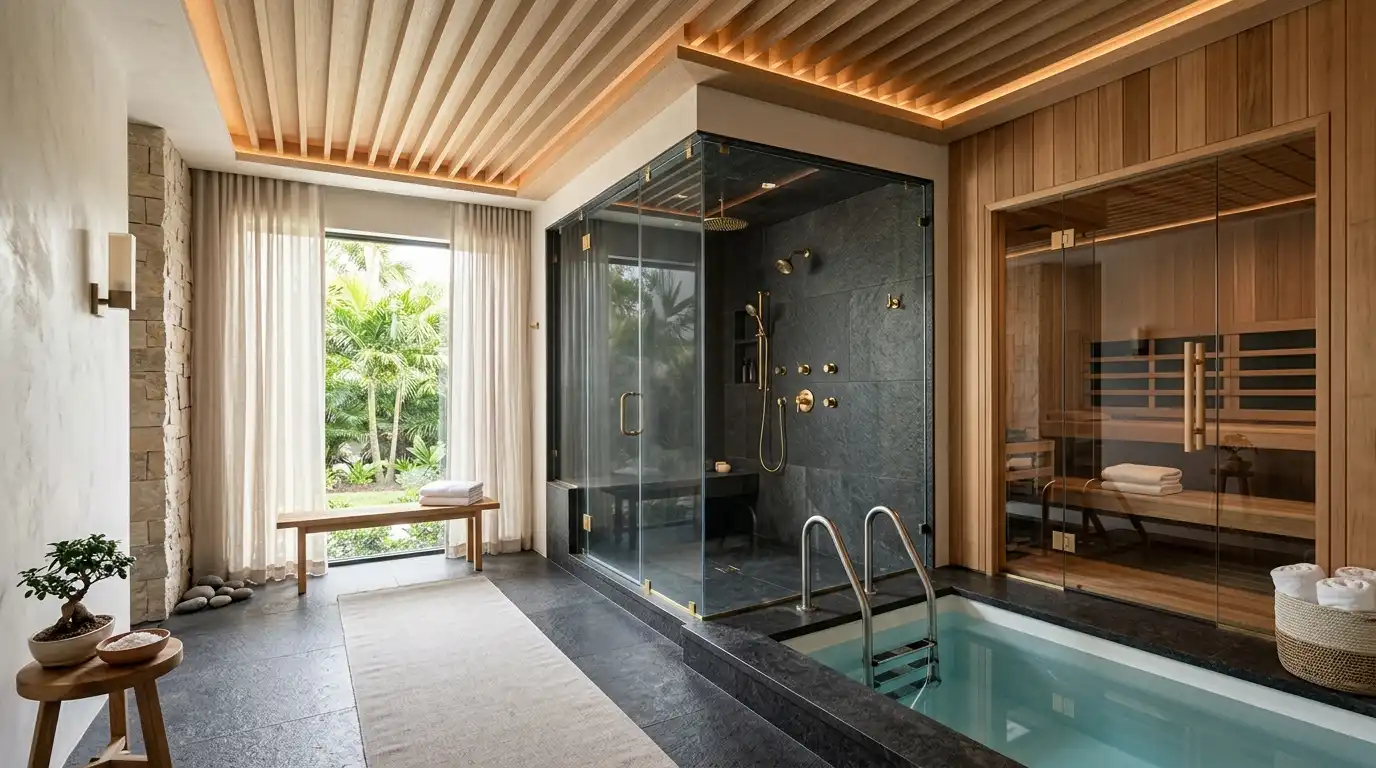
Infrared vs Traditional Sauna Before &


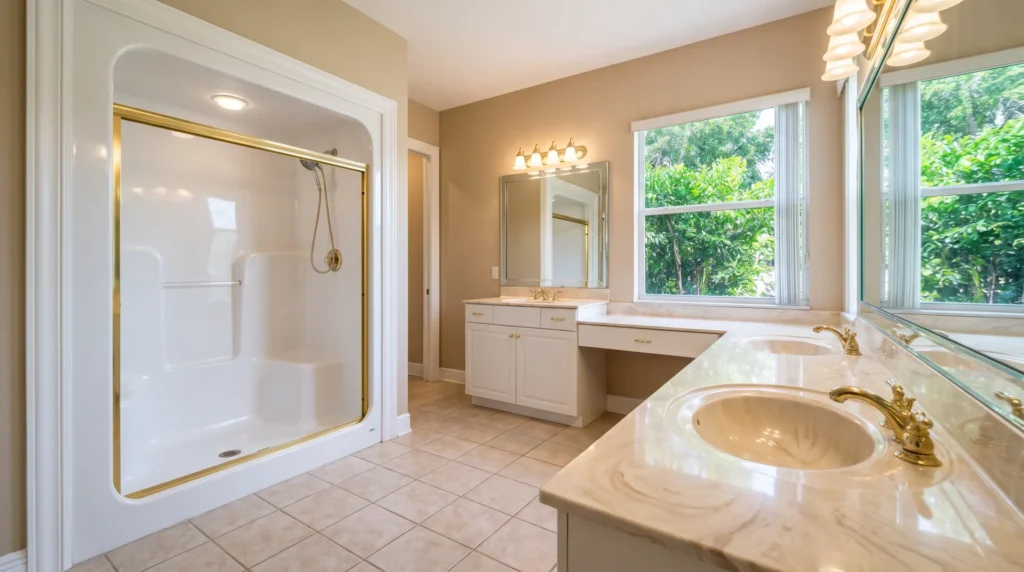


Infrared vs Traditional Sauna Questions
Does infrared or traditional use more electricity?
Infrared units usually pull less power and warm up sooner, so a session often takes less energy. Traditional heaters pull more and take longer to heat the room. Real-world use depends on the room size, the heater rating and how long it runs.
Can one sauna have both infrared and traditional heat?
Yes. A hybrid sauna puts infrared panels alongside a rock heater, so you can pick soft radiant heat or a classic hot-air session. Both systems need room, and a 240V circuit is usually required, which we work out in design.
Is a permit required to install a home sauna?
A prefab plug-in unit might not need one, but a built-in sauna on a new dedicated circuit usually requires an electrical permit, and condo associations often have to sign off. We take care of the permit and the association paperwork as part of the job.
Show us the room and we will scan it, render both kinds of sauna and quote you a single fixed price.
More in Steam Shower & Home Sauna Installation
Why Spa Clients Rely on Cutting Edge
No matter which heat you choose, a sauna is a compact room that asks a lot: insulation, vapor control, its own electrical and precise woodwork. Cutting Edge Kitchen & Bath is a licensed Florida general contractor serving Naples from our Naples office, with more than 500 remodels across Southwest Florida, nine Best of Houzz awards and a 4,000-square-foot showroom at 28280 Old 41 Road in Bonita Springs. A free LiDAR scan and photo-real 3D render come first so you can weigh the options, and then our own crews build under a single fixed-price contract. One team handles the electrical, carpentry and finish work from the first sketch through your first session.