

Smart Home Automation
Built In While You Remodel
With smart home automation, your lights, shades, audio, climate, security and leak detection all run on a single system that answers to wall keypads, your phone or your voice. A remodel is the best moment to add it, because open walls make room for low-voltage cable, keypad boxes and shade wiring. A finished home can be retrofitted with wireless systems like Lutron RadioRA or Caséta, yet a prewired setup is more dependable and simpler to grow. Begin with the network and lighting control, then add shades and audio on top.
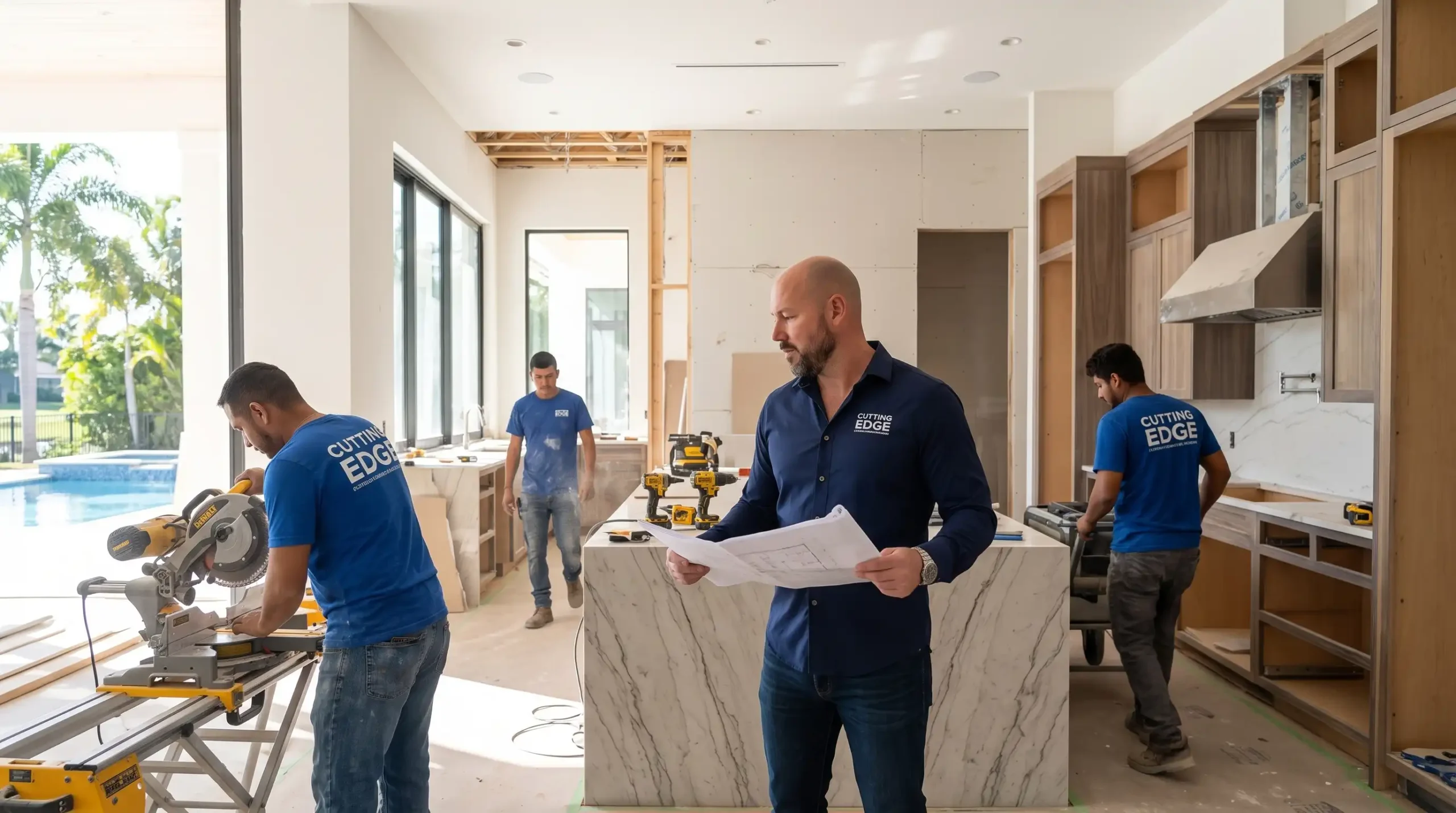
What Can Smart Home Automation Control?
In most houses, everything starts with lighting control. A single keypad takes the place of a row of switches, one scene can set several rooms together, and lights can shut off when you head out or come on as the sun goes down. Motorized shades cut glare, give you privacy and can lower themselves on hot afternoons without anyone touching them. With whole-home audio, in-ceiling speakers in every room play from a single source. Locks, thermostats, cameras, garage doors and leak sensors all live in that same app, so one command can arm the house and turn the AC down.
The big choice is whether to prewire or retrofit. A prewire puts in Cat6 network cable, speaker wire, shade power and keypad boxes while the walls and ceilings are still open; that is much cheaper than fishing wire through finished walls, and it allows hardwired systems that never lean on Wi-Fi. A retrofit relies on wireless dimmers, battery-powered shades and Wi-Fi gear, which perform well, though response can lag in a big house. In both cases you need a solid network with wired access points, because every device runs through it. Putting the equipment in one ventilated closet keeps it tidy and easy to service.
| System | Prewired during the remodel | Retrofitted later |
|---|---|---|
| Lighting control | Hardwired dimmers and keypads placed where planned | Wireless dimmers swapped in for current switches |
| Motorized shades | Power brought to the head of every window | Plug-in or battery-powered shades |
| Whole-home audio | Speaker wire run to in-ceiling speakers | Wireless speakers with fewer placement options |
| Network | Cat6 to TVs and wired access points | Mesh Wi-Fi |
| Security and cameras | Hardwired sensors and cameras | Wireless cameras plus battery sensors |
| Leak protection | Automatic shutoff valve on the main water line | Battery leak sensors that send alerts |
Look through our luxury remodeling services, where we design shades, audio and lighting control together with your finishes.
Why Is Automation More Important in Southwest Florida?
Part-time residency drives a lot of it. If you summer up north, you want to check indoor temperature, humidity and leak sensors from wherever you are, and an automatic water shutoff can catch a burst supply line before it wrecks the floors. Humidity control belongs in that plan too: with a smart thermostat and a dehumidifier, a shut-up house stays free of mold through the summer. A property manager or house watcher can look in remotely using cameras and door sensors. And with smart locks, a cleaner or contractor gets a temporary code rather than a key.
Storm season raises the stakes. Any automation system should go in with whole-house surge protection, since storm-related power swings and lightning take a toll on electronics. Tie in a standby generator and the system can tell you when it kicks on and which loads it is carrying. Plan motorized shades to work with impact windows and storm protection, never as a substitute for them. Condo associations may set rules about exterior cameras and about work inside common walls. New electrical work done during a remodel requires a permit from Collier County or the City of Naples, and the low-voltage layout should be settled before the drywall goes up.

Smart Home Automation Before &


Smart Home Automation Questions
Should smart home wiring go in during a remodel?
Yes. With walls and ceilings open, we can pull network cable, speaker wire and shade power and place keypad boxes right where you want them, at a small share of what a retrofit costs. If you add the devices down the road, the prewire still makes those upgrades easy.
Can an existing home be automated without opening the walls?
For the most part, yes. A finished home can take wireless lighting controls, battery shades, Wi-Fi thermostats, smart locks and wireless cameras. How quick and far-reaching they are comes down to the strength of the network, which is why we frequently start by adding wired access points.
Which smart devices help most in a seasonal Florida home?
The ones that earn their keep are remote thermostats that track humidity, leak sensors paired with an automatic water shutoff, door and window sensors, cameras and surge protection. As a group, they let you keep an eye on the house through the summer and spot trouble before it turns into a repair.
We scan the house, lay out speakers and keypads in your 3D render, and build the prewire into a single fixed price.
Smart Remodels Start at Cutting Edge
Automation turns out best when it is designed together with the lighting, cabinets and drywall, not tacked on once the painters are gone. At Cutting Edge Kitchen & Bath, we handle the prewire inside the remodel itself, so keypads align with the trim and speakers land on the ceiling layout. We serve Naples and Marco Island as a licensed Florida general contractor, with nine Best of Houzz awards and over 500 remodels across Southwest Florida. Each project starts with a free LiDAR scan and a photo-real 3D render, and our own crews do the build under a single fixed-price contract.