
Home Sauna Installation
What an Existing Home Needs
Adding a sauna to a home you already own comes down to four requirements: an appropriate dry spot within the air-conditioned house, adequate electrical service, a way to ventilate, and correct wall construction. Most traditional saunas call for a dedicated 240V circuit, while plenty of small infrared models run on 120V. The room is either framed or assembled from a prefab kit, then insulated, wrapped in a foil vapor barrier and lined with aspen, hemlock or cedar. You will need a permit for the electrical work, and condos also require association approval.
What Goes Into a Home Sauna Installation?
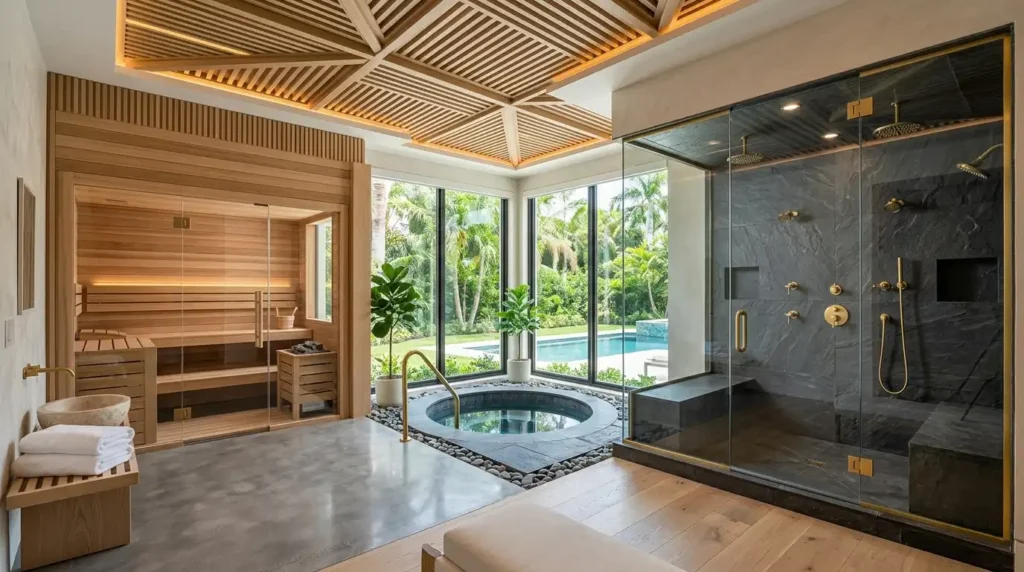
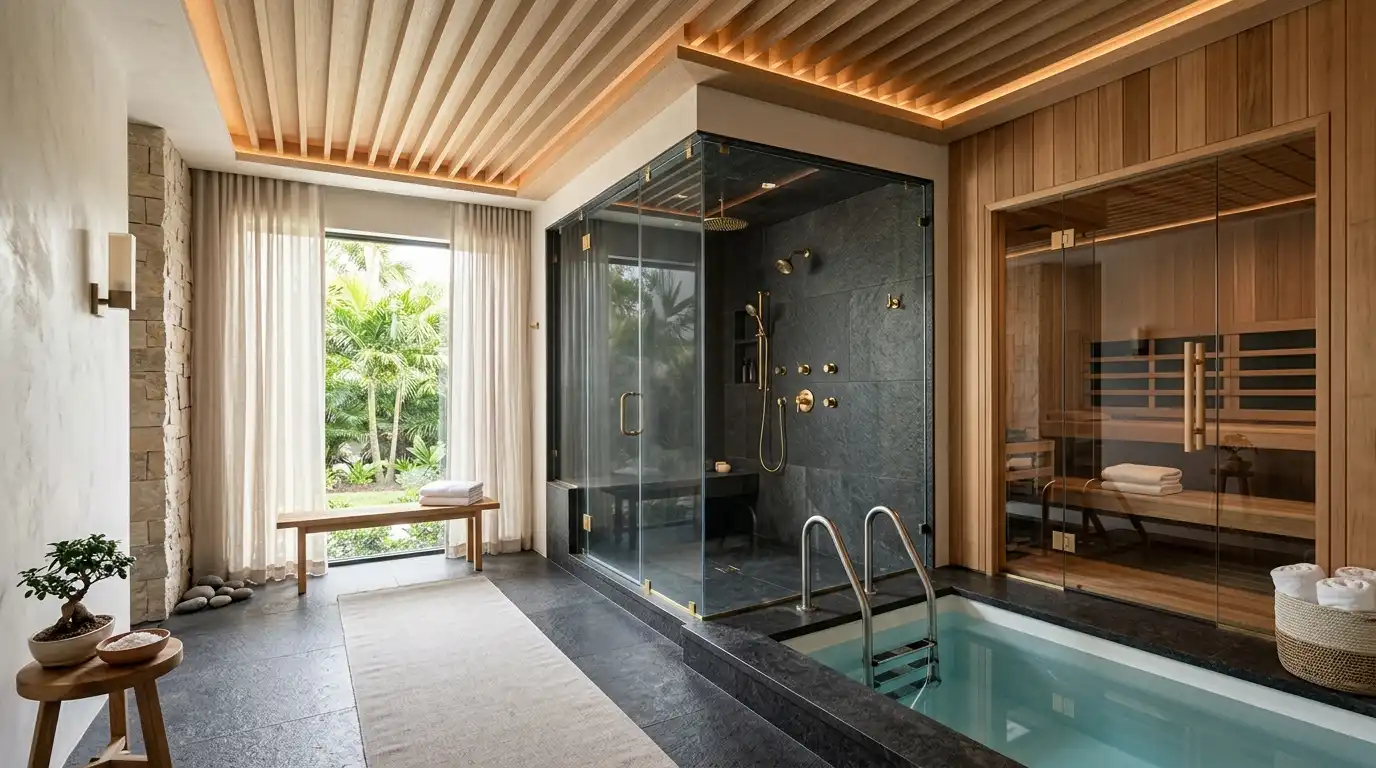
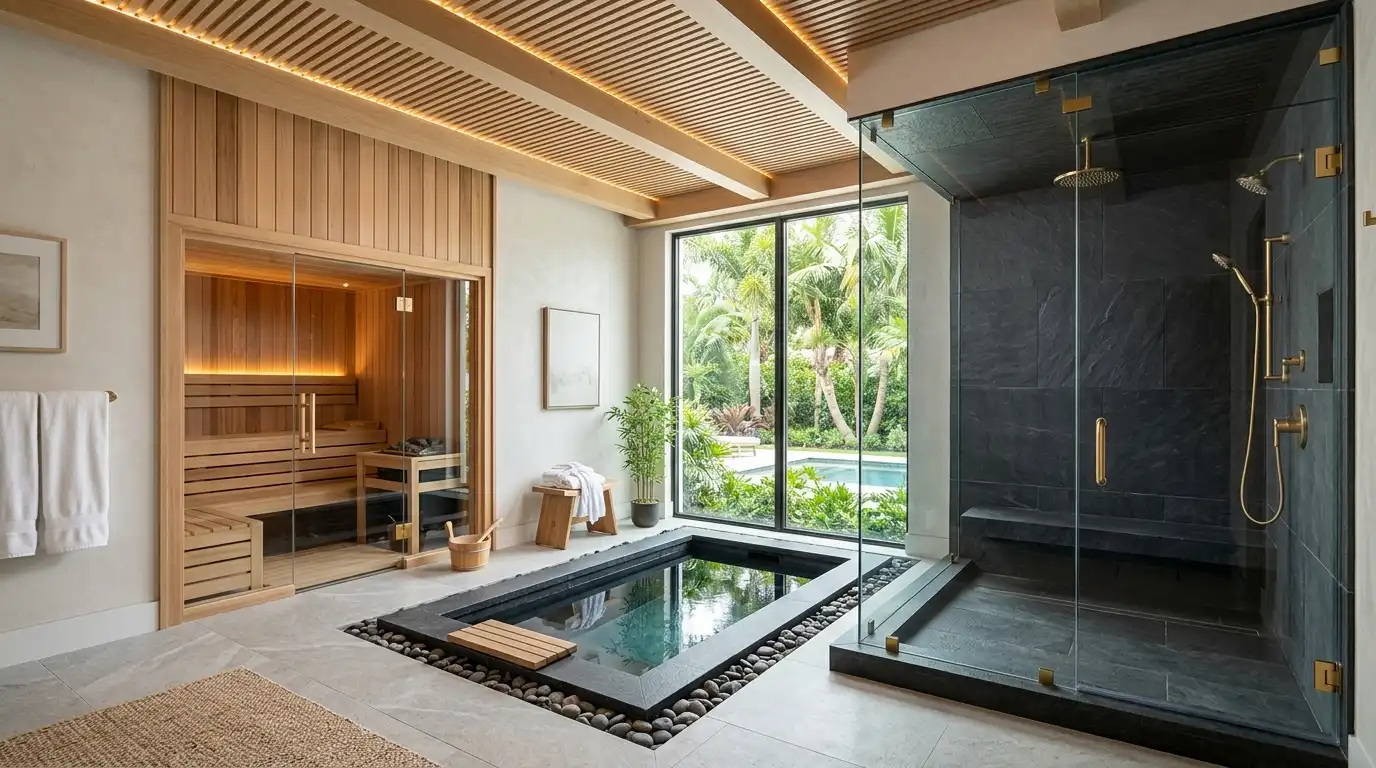
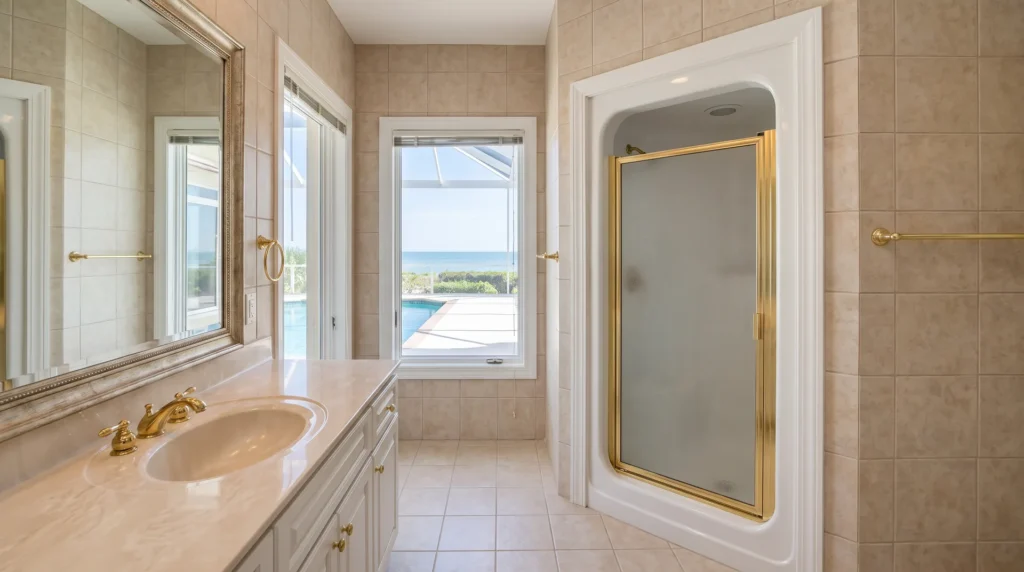
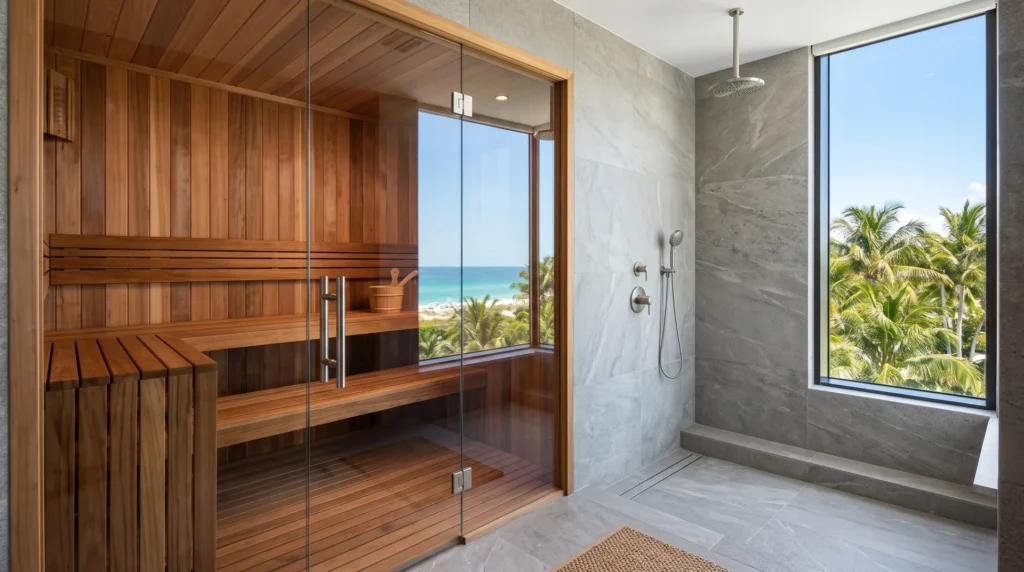
The first decision is where it goes. Popular spots include closets, extra bathrooms, small spare rooms and bath alcoves next to the primary shower, since they are already close to plumbing for a cool-down rinse. For two people, a traditional sauna needs about 4 by 6 feet and a ceiling near 7 feet, kept low so the heat stays at bench level. Infrared saunas can be more compact and frequently come as prefab cabinets that go together in a day, whereas a custom traditional room is framed on site for a built-in finish.
The build happens in a set order. Insulation goes into the walls and ceiling first, followed by a foil vapor barrier and then tongue-and-groove wood installed over an air gap. Benches use the same wood and concealed fasteners, so no hot metal touches your skin. The heater is matched to the room's cubic footage, installed with the manufacturer’s clearances, and wired to a controller mounted outside the door or just inside it. Fresh air moves through via a low intake vent by the heater and a high exhaust vent on the far wall. Home spa packages begin at $18,500.
| Item | Traditional sauna | Infrared sauna |
|---|---|---|
| Heat source | Electric heater and stones | Infrared panels set in walls and benches |
| Typical temperature | 150–195°F | 120–150°F |
| Electrical | Most heaters need a dedicated 240V circuit | Small units often 120V; bigger rooms may require 240V |
| Construction | Wood lining, foil vapor barrier, insulation | Typically a prefab cabinet; custom builds available |
| Ventilation | Low intake by the heater, high exhaust across from it | Simpler; most kits include built-in vents |
| Space | Roughly 4 × 6 ft for two people | Down to 3 × 4 ft for one person |
Look over our Good, Better and Best home spa packages, from one infrared sauna to a complete spa suite with steam.
What Is Different for a Sauna in Naples and Collier County?
Unless the model is rated for outdoor use, keep the sauna within the air-conditioned envelope. In Southwest Florida, lanais and garages stay hot and humid, which is hard on wood, electronics and door seals, and damp surrounding air makes the sauna slower to heat. Indoors, the vapor barrier is critical, since a hot room against cool, conditioned walls can push moisture into the framing. We also route the exhaust so warm air exits the sauna without venting into an attic.
A home with 200-amp electrical service can typically take on a new 240V sauna circuit with no issue, but older or undersized panels may need upgrading, and we look at that during the free scan. The permit is pulled by a licensed electrician through Collier County or the City of Naples. In a condo, the association usually reviews the electrical work along with anything that adds exhaust or heat. Many owners head to the sauna after tennis, golf or a long boat day to relax and recover.
Home Sauna Installation Before &


Home Sauna Questions
What does it cost to put a sauna in a house?
The price depends on which kind of sauna you choose, a prefab infrared unit or a custom traditional room, plus its size, the wood species, and the amount of electrical and finish work the space calls for. Turning a closet that already has power into a sauna costs much less than building a new room. After a free scan, we price your exact plan.
Is a permit required to install a home sauna?
Running a new dedicated circuit usually requires a permit and an inspection, and the work should be done by a licensed electrician. New walls or nearby plumbing changes can bring building permits into play. Most condo associations require their own approval on top of that.
Which wood works best in a sauna?
Western red cedar is the traditional pick because of its scent and stability. Owners who want a lighter tone or no aroma often go with aspen or hemlock, which also feel cooler on the benches. Installed over a correct vapor barrier, all three hold up well to heat and humidity.
Show us the room or closet you are thinking of, and we will scan it, render it and quote a single price.
More in Steam Shower & Home Sauna Installation
Saunas Installed Right by Cutting Edge
For a small room, a sauna packs in a lot of engineering: heat, power, vapor control and airflow. As a licensed Florida general contractor, Cutting Edge Kitchen & Bath takes care of every part, with our own carpenters and electricians doing the work. First comes a free LiDAR scan of your space, then a photo-real 3D render of the completed sauna and a price under a single fixed contract. We serve Naples from our Naples office and have a 4,000-square-foot showroom on Old 41 Road in Bonita Springs, along with nine Best of Houzz awards and over 500 remodels across Southwest Florida.